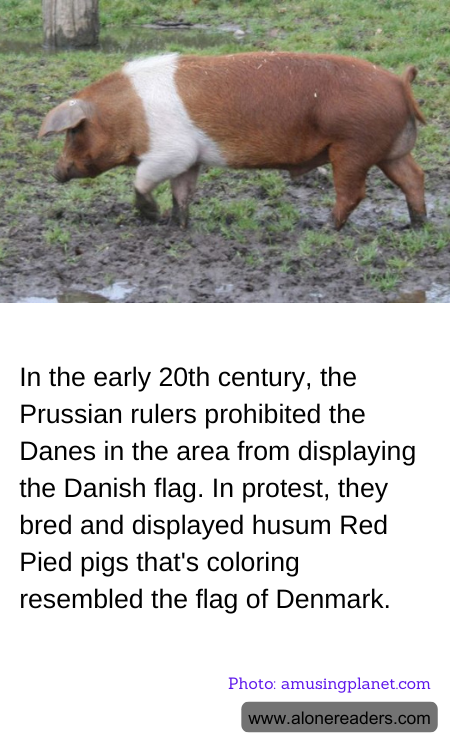
In the early 20th century, a unique form of protest emerged in the region of Schleswig, which was under Prussian control at the time. The Prussian authorities had imposed a ban on the display of the Danish flag, a move that was deeply resented by the Danish minority living in the area. In response to this prohibition, the Danes in Schleswig found a creative and symbolic way to express their national pride and defiance: they bred and displayed Husum Red Pied pigs, whose distinctive coloring bore a striking resemblance to the Danish flag.
The Husum Red Pied pig, known locally as "Husumer Protestschwein" or "Protest Pig," became an emblem of resistance and cultural identity. These pigs are characterized by their red and white coloration, which mirrors the red and white of the Danish flag. By breeding these pigs and showcasing them in public, the Danes were able to circumvent the ban on their national symbol while still making a powerful statement of their heritage and unity.
This act of defiance was not just about circumventing a ban; it was a testament to the resilience and ingenuity of the Danish community. The Husum Red Pied pigs became a living symbol of protest, embodying the spirit of a people who refused to let their identity be suppressed. The pigs were paraded at fairs and markets, where their presence was a subtle yet unmistakable reminder of the Danish flag and the cultural ties that the Prussian authorities sought to sever.
The story of the Husum Red Pied pigs is a fascinating example of how communities can use creativity and symbolism to resist oppression and maintain their cultural identity. It highlights the power of non-violent protest and the importance of cultural symbols in uniting people and preserving heritage. The pigs became more than just livestock; they were a rallying point for the Danish community, a way to assert their presence and pride in a region where their identity was under threat.
Today, the tale of the Husum Red Pied pigs is remembered as a unique chapter in the history of the Danish minority in Schleswig. It serves as a reminder of the enduring power of cultural symbols and the creative ways in which people can resist oppression. The legacy of these pigs continues to be celebrated, not only as a quirky historical anecdote but as a testament to the enduring spirit of a community that found a way to express its identity against the odds.
