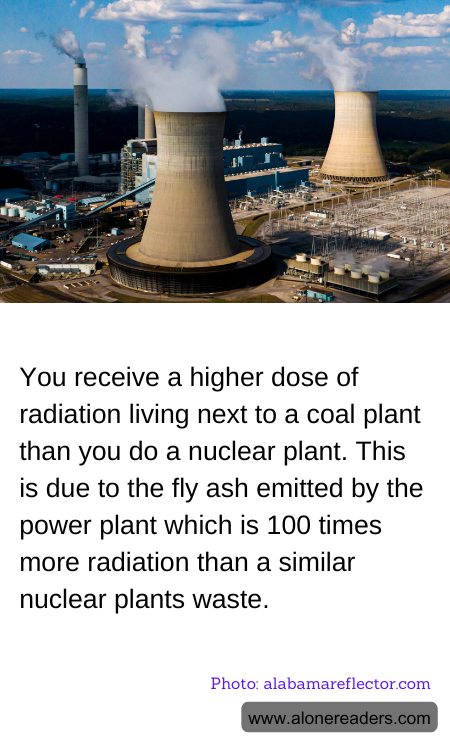
In the ongoing debate about energy production and its environmental impact, nuclear power often finds itself under intense scrutiny due to concerns about radiation and safety. However, a lesser-known fact is that living near a coal-fired power plant can expose individuals to higher levels of radiation than residing near a nuclear facility. This surprising reality stems from the fly ash emitted by coal plants, which contains naturally occurring radioactive materials.
Fly ash is a byproduct of burning coal for electricity. It contains trace amounts of uranium and thorium, elements that are naturally radioactive. When coal is burned, these elements become concentrated in the fly ash, which is then released into the environment. Studies have shown that the radiation dose from fly ash can be up to 100 times greater than the radiation emitted by a nuclear power plant's waste under normal operating conditions. This is because nuclear plants are designed with stringent safety measures to contain and manage radioactive materials, whereas coal plants release fly ash into the atmosphere as part of their normal operation.
The misconception that nuclear power is the more dangerous option often overshadows the significant environmental and health impacts of coal power. While nuclear plants are subject to rigorous regulations and continuous monitoring to ensure minimal radiation exposure to the public, coal plants have historically been less regulated in terms of their radioactive emissions. This oversight means that communities living near coal plants may unknowingly be exposed to higher levels of radiation.
Moreover, the environmental impact of coal extends beyond radiation. The combustion of coal releases a host of pollutants, including sulfur dioxide, nitrogen oxides, and particulate matter, which contribute to air pollution and respiratory problems. In contrast, nuclear power plants do not emit these pollutants, making them a cleaner energy source in terms of air quality.
Understanding the true impact of different energy sources is crucial as the world seeks sustainable solutions to meet growing energy demands. While nuclear energy is not without its challenges, such as waste management and the potential for catastrophic failure, it offers a low-carbon alternative that can significantly reduce greenhouse gas emissions compared to fossil fuels. As technology advances, the safety and efficiency of nuclear power continue to improve, making it a viable option for reducing our reliance on coal and other carbon-intensive energy sources.
In conclusion, the perception of nuclear power as the more hazardous option is not entirely accurate when considering the radiation exposure from coal plants. By recognizing the hidden risks associated with coal and the potential benefits of nuclear energy, society can make more informed decisions about the future of energy production. As we move towards a more sustainable future, it is essential to weigh the risks and benefits of all energy sources to ensure the health and safety of both people and the planet.
