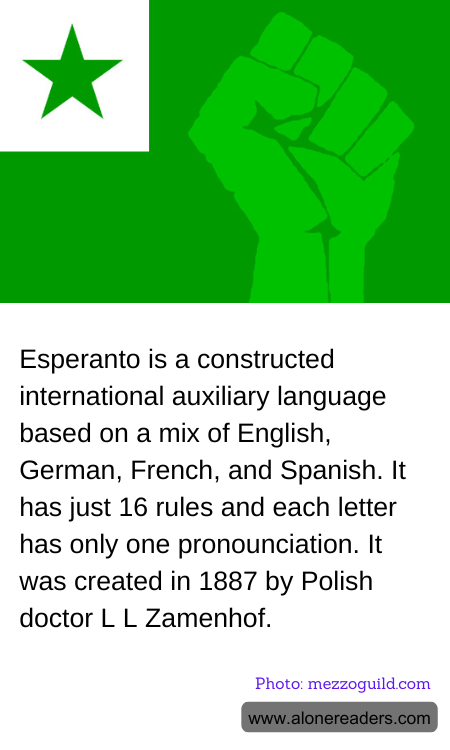
Esperanto, a constructed international auxiliary language, stands as a testament to the vision of fostering global communication and understanding. Created in 1887 by Polish ophthalmologist L. L. Zamenhof, Esperanto was designed to be an easy-to-learn and politically neutral language that could bridge the gap between speakers of different native tongues. Zamenhof's motivation stemmed from his experiences growing up in a multicultural and multilingual environment, where he witnessed firsthand the misunderstandings and conflicts that language barriers could create.
The structure of Esperanto is ingeniously simple, making it accessible to learners of all ages and backgrounds. It is based on a blend of elements from several major European languages, including English, German, French, and Spanish. This amalgamation allows speakers of these languages to find familiar roots and structures, easing the learning process. Esperanto's grammar is governed by just 16 rules, which are free from exceptions, a stark contrast to the complexities often found in natural languages. This regularity is one of its most appealing features, as it allows learners to quickly grasp the fundamentals and begin communicating effectively.
One of the unique aspects of Esperanto is its phonetic consistency. Each letter in the Esperanto alphabet corresponds to a single sound, eliminating the ambiguities and irregularities that can make pronunciation challenging in other languages. This feature not only simplifies learning but also ensures that speakers from different linguistic backgrounds can understand each other with ease. The language's straightforward pronunciation rules contribute to its reputation as an efficient and practical tool for international communication.
Despite its relatively small number of speakers compared to global languages, Esperanto has cultivated a dedicated and passionate community. Enthusiasts around the world use it for travel, cultural exchange, and even as a medium for literature and music. The language's neutrality and inclusivity have made it a symbol of international solidarity, with speakers often referring to themselves as part of a global family. Esperanto gatherings, known as congresses, are held regularly, bringing together people from diverse cultures to celebrate their shared linguistic bond.
In the digital age, Esperanto has found new life online, where it serves as a bridge for cross-cultural dialogue. Social media platforms, forums, and language learning apps have facilitated its spread, allowing people from all corners of the globe to connect and communicate. While Esperanto may not have achieved the widespread adoption its creator envisioned, it continues to inspire those who believe in the power of language to unite humanity.
Esperanto's enduring appeal lies in its simplicity, inclusivity, and the idealistic vision it represents. As a constructed language, it offers a unique solution to the challenges of global communication, reminding us of the potential for language to transcend borders and foster understanding among people of different nations. Whether as a linguistic curiosity or a practical tool for international dialogue, Esperanto remains a fascinating and relevant part of the world's linguistic landscape.
