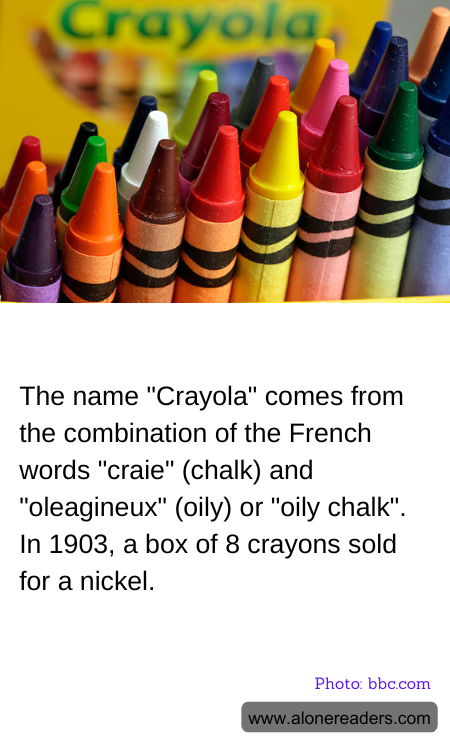
The name "Crayola" is a delightful blend of linguistic creativity and practicality, derived from the French words "craie," meaning chalk, and "oleagineux," meaning oily. This combination perfectly encapsulates the essence of the product: an oily chalk that has brought color and creativity into the lives of millions. The journey of Crayola began in 1903 when the company introduced its first box of crayons, which contained eight vibrant colors and sold for just a nickel. This modest beginning marked the start of a legacy that would become a staple in classrooms and homes around the world.
Crayola's inception was a response to the growing demand for safe and affordable art supplies for children. Prior to Crayola, many coloring materials contained toxic substances, making them unsuitable for young artists. The founders of Crayola, Edwin Binney and C. Harold Smith, recognized this gap in the market and set out to create a product that was not only safe but also accessible to families of all economic backgrounds. Their innovation led to the creation of crayons that were non-toxic, durable, and easy to use, revolutionizing the way children could express themselves through art.
The original box of Crayola crayons featured eight colors: red, orange, yellow, green, blue, violet, brown, and black. These colors were carefully selected to provide a broad palette for budding artists, allowing them to explore and create with a wide range of hues. Over the years, the Crayola brand has expanded its offerings to include a dazzling array of colors, with some boxes now containing as many as 120 different shades. Despite this expansion, the original eight colors remain iconic, symbolizing the brand's enduring commitment to creativity and innovation.
Crayola's impact extends beyond the simple joy of coloring. The brand has played a significant role in education, helping children develop fine motor skills, improve hand-eye coordination, and enhance their understanding of color theory. Moreover, coloring has been shown to have therapeutic benefits, providing a calming and meditative experience for people of all ages. In this way, Crayola has contributed not only to artistic development but also to emotional well-being.
Today, Crayola is a beloved name worldwide, synonymous with creativity and childhood. The brand continues to innovate, introducing new products that inspire imagination and exploration. From markers and colored pencils to digital art tools, Crayola remains at the forefront of artistic expression, encouraging people everywhere to unleash their creativity.
In essence, the story of Crayola is one of transformation and inspiration. From its humble beginnings as an "oily chalk" to its status as a global icon, Crayola has colored the world with its vibrant hues, leaving an indelible mark on generations of artists. As we look to the future, Crayola's legacy of innovation and creativity promises to continue inspiring the artists of tomorrow.
