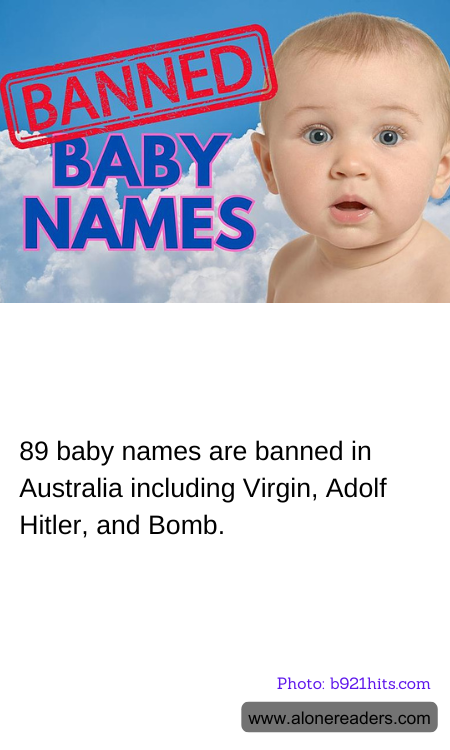
In Australia, the naming of a child is a significant event, often reflecting cultural heritage, familial traditions, or personal preferences. However, there are certain boundaries set by the government to ensure that names are appropriate and do not cause undue harm or embarrassment to the child. Recently, it has come to light that 89 baby names have been banned in Australia, including controversial choices such as Virgin, Adolf Hitler, and Bomb.
The Registrar of Births, Deaths, and Marriages in each Australian state and territory holds the authority to reject names that are deemed offensive, impractical, or contrary to the public interest. This regulatory measure is in place to protect children from potential ridicule or discrimination that could arise from having a contentious name. Names that are considered obscene, too long, or that resemble official titles and ranks are typically disallowed.
Among the prohibited names, Adolf Hitler stands out due to its historical connotations and the negative associations with the infamous dictator. Naming a child after such a figure could lead to significant social stigma and emotional distress. Similarly, the name Bomb is banned as it could be perceived as promoting violence or terrorism, which is not in line with the values of a peaceful society.
The name Virgin, while not inherently offensive, is also on the banned list. This decision likely stems from the potential for the name to subject the child to teasing or unwanted attention, particularly during their formative years. The aim is to ensure that a child's name does not become a source of discomfort or bullying.
These restrictions highlight the delicate balance between parental rights and societal norms. While parents are free to choose names that hold personal significance, the government intervenes when a name could potentially harm the child's well-being or disrupt social harmony. This approach underscores the importance of considering the long-term implications of a name, beyond its immediate appeal or uniqueness.
In conclusion, the banning of certain baby names in Australia serves as a reminder of the responsibility that comes with naming a child. It is a decision that carries lifelong implications, and as such, it is crucial to choose a name that will positively contribute to the child's identity and social interactions. By adhering to these guidelines, parents can ensure that their child's name is a source of pride and not a burden.
