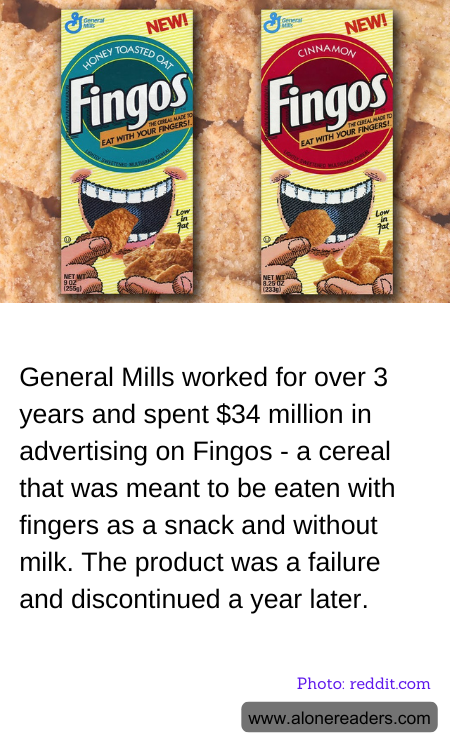
In the ever-evolving world of breakfast cereals, innovation is key to capturing the attention of consumers. General Mills, a titan in the food industry, embarked on an ambitious journey to revolutionize the way people consumed cereal. The result was Fingos, a unique product designed to be eaten with fingers as a snack, without the need for milk. Despite the company's best efforts, Fingos ultimately failed to resonate with consumers, leading to its discontinuation just a year after its launch.
The concept behind Fingos was intriguing. General Mills envisioned a cereal that could transcend the breakfast table and become a convenient, on-the-go snack. This idea was particularly appealing in the early 1990s, a time when snacking was becoming increasingly popular. The company invested over three years in developing Fingos, aiming to create a product that was both tasty and easy to eat without utensils. The cereal pieces were designed to be larger and more robust than traditional cereals, making them ideal for snacking.
To support the launch of Fingos, General Mills allocated a staggering $34 million to advertising. The campaign was extensive, targeting a wide audience and emphasizing the novelty of eating cereal with fingers. Advertisements highlighted the convenience and fun of Fingos, portraying it as a versatile snack that could be enjoyed anywhere, anytime. Despite these efforts, the product struggled to gain traction in the market.
Several factors contributed to the downfall of Fingos. One of the primary challenges was changing consumer habits. While the idea of a finger-friendly cereal was innovative, it was a significant departure from the traditional cereal experience that many consumers were accustomed to. Additionally, the taste and texture of Fingos did not appeal to everyone, with some consumers finding it less satisfying than other snack options available at the time.
Moreover, the marketing message, while creative, may have been too ahead of its time. The concept of a cereal snack was novel, but it lacked the immediate appeal needed to drive widespread adoption. Consumers were not ready to embrace such a radical shift in how they consumed cereal, and the product's unique selling proposition failed to create a lasting impression.
In the end, Fingos serves as a cautionary tale about the challenges of innovation in the food industry. Despite the significant investment in time and resources, the product was unable to achieve the success General Mills had hoped for. The discontinuation of Fingos a year after its launch underscores the importance of understanding consumer preferences and the risks associated with deviating too far from established norms.
While Fingos may have been a commercial failure, it remains a testament to the spirit of innovation that drives companies like General Mills. The lessons learned from this venture continue to inform the development of new products, reminding us that even the most creative ideas must align with consumer desires to succeed in the marketplace.
