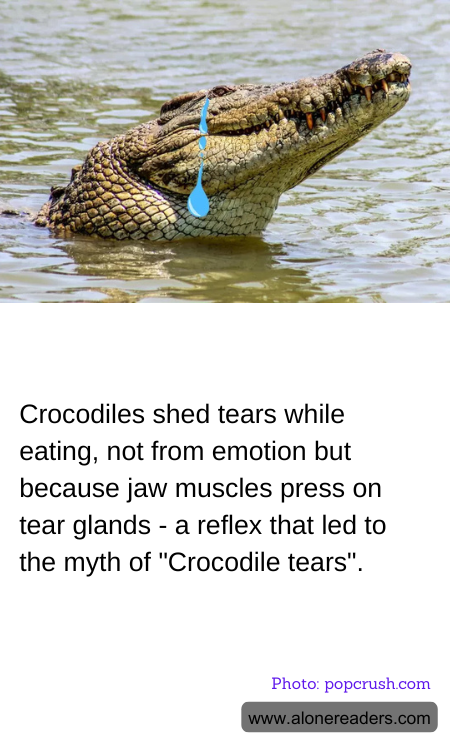
The phrase "crocodile tears" is often used to describe insincere displays of emotion, but the origin of this expression is rooted in a fascinating natural phenomenon. Crocodiles, those ancient reptiles that have roamed the Earth for millions of years, do indeed shed tears while eating. However, these tears are not a sign of emotion or remorse. Instead, they are the result of a physiological reflex that occurs when the crocodile's jaw muscles press against its tear glands during the act of feeding.
Crocodiles are known for their powerful jaws and voracious appetites. When they clamp down on their prey, the immense pressure exerted by their jaw muscles inadvertently compresses the tear glands located near the eyes. This compression causes tears to flow, creating the illusion that the crocodile is crying. In reality, these tears serve no emotional purpose; they are merely a byproduct of the crocodile's feeding mechanism.
The myth of "crocodile tears" has been perpetuated through literature and folklore for centuries. It is believed that the expression first appeared in the 14th century, when it was used to describe the false grief of those who feigned sorrow. The idea that crocodiles weep while consuming their prey captured the imagination of storytellers and became a metaphor for insincerity. Despite its mythical origins, the phrase has endured in modern language, often used to criticize those who display hypocritical or superficial emotions.
Understanding the true nature of crocodile tears provides a glimpse into the complex biology of these remarkable creatures. Crocodiles are highly adapted predators, with sensory and physiological systems finely tuned for survival. Their ability to shed tears while eating is just one of the many intriguing aspects of their biology. It serves as a reminder that nature often defies our expectations and that the behaviors of animals can be both mysterious and enlightening.
For those who encounter the phrase "crocodile tears" in everyday conversation, it is worth remembering its origins in the natural world. While the expression may be used to describe insincere emotions, it is rooted in a genuine biological response. The next time you hear someone accused of shedding crocodile tears, you can appreciate the fascinating intersection of language, myth, and science that has given rise to this enduring metaphor.
