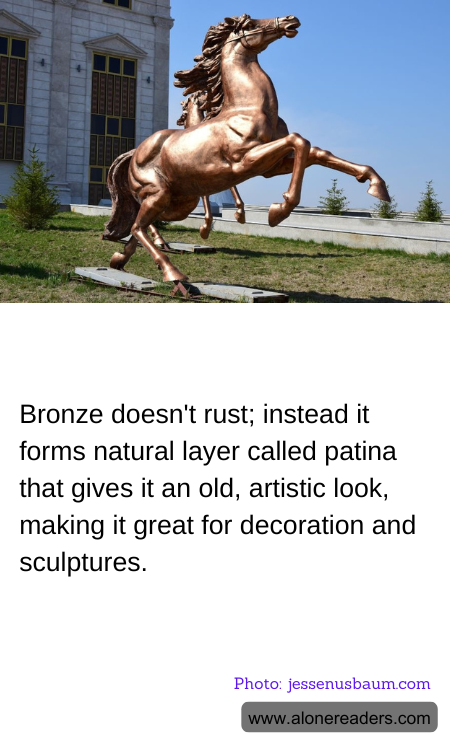
Bronze, a timeless alloy composed primarily of copper and tin, has been cherished throughout history for its durability and aesthetic appeal. Unlike iron or steel, bronze does not succumb to rust. Instead, it undergoes a fascinating transformation that enhances its beauty and longevity. This transformation results in the formation of a natural layer known as patina, which not only protects the metal but also imparts an old-world charm that is highly valued in art and decoration.
The process of patination occurs when bronze is exposed to the elements over time. The surface of the metal reacts with oxygen, moisture, and other environmental factors, leading to the development of a thin, protective film. This patina can vary in color, ranging from shades of green and blue to rich browns and blacks, depending on the specific conditions and composition of the bronze. The patina serves as a protective barrier, preventing further corrosion and preserving the integrity of the metal beneath. This unique characteristic makes bronze an ideal material for outdoor sculptures and architectural elements, as it can withstand the test of time while maintaining its artistic allure.
The aesthetic appeal of patina is one of the reasons bronze has been a favored medium for artists and sculptors throughout the ages. The natural aging process of bronze imbues each piece with a distinct character, telling a story of its own. This quality is particularly appreciated in decorative items and sculptures, where the patina adds depth and texture, enhancing the overall visual impact. Collectors and art enthusiasts often seek out bronze pieces with well-developed patinas, as they are considered more valuable and authentic.
In addition to its visual appeal, the patina on bronze also symbolizes a connection to history and tradition. Many ancient civilizations, such as the Greeks and Romans, utilized bronze for their sculptures and artifacts, many of which have survived to this day thanks to the protective properties of the patina. This historical significance adds another layer of appreciation for bronze artworks, as they serve as tangible links to the past.
For those interested in incorporating bronze into their decor, the material offers versatility and timeless elegance. Whether used in the form of statues, vases, or architectural details, bronze can elevate the aesthetic of any space. Its ability to develop a patina over time ensures that each piece will continue to evolve, offering a dynamic and ever-changing visual experience.
In conclusion, the unique properties of bronze make it an exceptional choice for art and decoration. The natural formation of patina not only protects the metal but also enhances its beauty, providing a sense of history and timelessness. Whether admired for its artistic value or its historical significance, bronze remains a cherished material that continues to captivate and inspire across generations.
