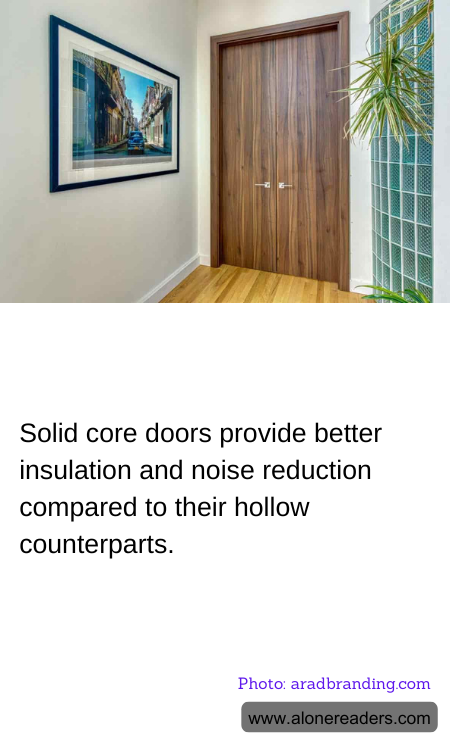
When it comes to choosing doors for your home or office, the decision often boils down to two main types: solid core doors and hollow core doors. While both have their own set of advantages, solid core doors stand out for their superior insulation and noise reduction capabilities, making them a preferred choice for many homeowners and businesses.
Solid core doors are constructed with a dense inner core made from wood or composite materials, which is then covered with a veneer or laminate. This construction gives them a substantial weight and feel, akin to traditional solid wood doors, but at a more affordable price point. The density of the core plays a crucial role in their ability to insulate and reduce noise. The thick, solid material acts as a barrier that minimizes the transfer of sound and temperature, making them an excellent choice for rooms where privacy and comfort are priorities.
In contrast, hollow core doors are made with a lightweight honeycomb structure inside, often surrounded by a thin layer of wood or fiberboard. While they are more economical and easier to install due to their lighter weight, they fall short in terms of insulation and soundproofing. The hollow space within these doors allows sound waves and temperature fluctuations to pass through more easily, which can be a disadvantage in environments where maintaining a consistent temperature or reducing noise is important.
The benefits of solid core doors extend beyond just insulation and noise reduction. Their robust construction makes them more durable and resistant to wear and tear, which can be particularly advantageous in high-traffic areas. Additionally, their heft and solidity provide a sense of security and permanence that many find appealing. This makes them an ideal choice for entry doors, bedrooms, and home offices where both privacy and durability are desired.
Moreover, solid core doors can contribute to energy efficiency in a building. By providing better insulation, they help maintain a stable indoor temperature, reducing the need for excessive heating or cooling. This can lead to lower energy bills and a smaller carbon footprint, aligning with the growing trend towards more sustainable living practices.
While the initial cost of solid core doors may be higher than that of hollow core doors, the long-term benefits often justify the investment. Their ability to enhance the comfort, privacy, and energy efficiency of a space makes them a worthwhile consideration for anyone looking to improve their living or working environment.
In conclusion, when weighing the options between solid core and hollow core doors, the advantages of solid core doors in terms of insulation and noise reduction are clear. They offer a blend of functionality, durability, and aesthetic appeal that can significantly enhance the quality of life in any space. Whether you're renovating your home or designing a new office, solid core doors are a choice that promises to deliver both immediate and lasting benefits.
