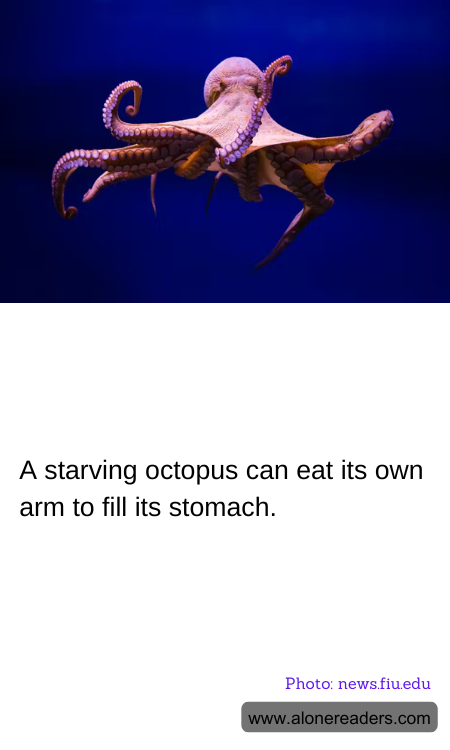
In the mysterious depths of the ocean, the octopus stands out as one of the most fascinating and enigmatic creatures. Known for their intelligence, camouflage abilities, and unique physiology, octopuses have captivated the curiosity of scientists and ocean enthusiasts alike. Among their many intriguing behaviors, one of the most astonishing is their ability to consume their own arms when faced with starvation.
This self-cannibalistic behavior, while seemingly drastic, is a survival mechanism that highlights the octopus's adaptability in the face of adversity. In the wild, food scarcity can be a significant challenge for octopuses, especially in environments where prey is not abundant. When an octopus is unable to find enough food, it may resort to eating one of its own arms to sustain itself. This act of self-preservation is not only a testament to the octopus's resilience but also a reflection of the harsh realities of life in the ocean.
The process of arm consumption is not as detrimental as it might initially appear. Octopuses possess remarkable regenerative abilities, allowing them to regrow lost limbs over time. This regeneration is a complex biological process that involves the growth of new muscle, nerves, and skin, eventually restoring the arm to its original functionality. This capability ensures that the octopus can continue to hunt and defend itself effectively, even after losing an arm.
While the idea of an octopus eating its own arm may seem unsettling, it is important to understand it within the context of survival. In the wild, animals often face extreme conditions that require them to adapt in unexpected ways. For the octopus, consuming its own arm is a last resort, a desperate measure taken only when other options have been exhausted. It is a stark reminder of the lengths to which nature's creatures will go to endure and thrive in their environments.
This behavior also underscores the importance of understanding and preserving marine ecosystems. As human activities continue to impact ocean habitats, the availability of food sources for marine life can be affected, potentially increasing the frequency of such extreme survival tactics. By promoting conservation efforts and sustainable practices, we can help ensure that octopuses and other marine species have access to the resources they need to survive without resorting to self-cannibalism.
In conclusion, the octopus's ability to eat its own arm is a remarkable example of nature's ingenuity and the relentless drive for survival. It serves as a powerful reminder of the complex and often harsh realities of life in the ocean, as well as the incredible adaptability of the creatures that inhabit it. By appreciating and protecting these unique animals and their habitats, we can contribute to a healthier and more balanced marine ecosystem for generations to come.
