In the lush, vibrant ecosystems of tropical rainforests, nature has crafted some of the most fascinating adaptations to ensure the survival of its inhabitants. Among these marvels is the cassowary, a large, flightless bird native to the dense forests of New Guinea, nearby islands, and northern Australia. Known for their striking appearance and formidable presence, cassowaries also possess a unique trait that sets them apart in the avian world: they lay green eggs.
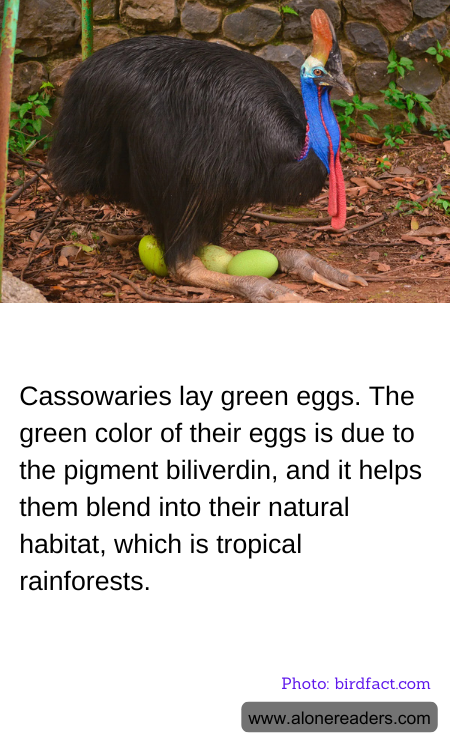
The green hue of cassowary eggs is not merely a quirk of nature but a sophisticated adaptation that plays a crucial role in the survival of their offspring. This distinctive coloration is attributed to the presence of biliverdin, a pigment that imparts a greenish tint to the eggshells. Biliverdin is a byproduct of the breakdown of hemoglobin, the molecule responsible for transporting oxygen in the blood. In cassowaries, this pigment is deposited in the eggshells, resulting in their characteristic green color.
The green coloration of cassowary eggs serves a vital purpose in their natural habitat. The dense foliage and dappled light of tropical rainforests create a complex visual environment where blending in can mean the difference between life and death. The green eggs are remarkably well-camouflaged against the backdrop of the forest floor, where they are laid. This natural camouflage helps protect the eggs from potential predators, such as snakes and monitor lizards, which might otherwise pose a threat to the developing chicks.
Cassowaries are solitary creatures, and the responsibility of incubating the eggs falls to the male. After the female lays the eggs, the male takes over, diligently guarding and incubating them for about 50 days. During this period, the green coloration of the eggs provides an added layer of security, allowing the male to remain relatively undetected while he fulfills his parental duties. This camouflage is particularly important given the cassowary's role as a keystone species in its ecosystem, where its survival and reproductive success have broader implications for the health of the rainforest.
The story of the cassowary and its green eggs is a testament to the intricate and often surprising ways in which nature adapts to ensure the continuation of life. It highlights the delicate balance of ecosystems and the evolutionary pressures that shape the behaviors and characteristics of the creatures within them. For those fortunate enough to witness these remarkable birds in their natural habitat, the sight of a cassowary and its green eggs is a vivid reminder of the wonders of the natural world and the intricate tapestry of life that thrives within it.
