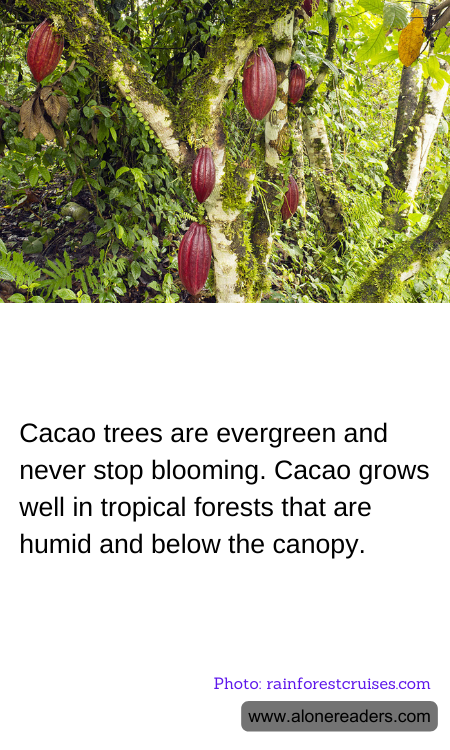
Cacao trees, the source of the beloved chocolate, are fascinating plants that thrive in the lush, humid environments of tropical forests. These evergreen trees are unique in their ability to bloom continuously throughout the year, a trait that ensures a steady production of cacao pods. This perpetual blooming is a testament to the tree's adaptation to its natural habitat, where the climate remains consistently warm and moist.
The cacao tree, scientifically known as Theobroma cacao, is native to the tropical regions of Central and South America. It flourishes under the canopy of larger trees, which provide the necessary shade and protection from direct sunlight. This environment mimics the tree's natural habitat, where it has evolved to grow in the understory of dense forests. The canopy not only shields the cacao tree from harsh sunlight but also helps maintain the humidity levels essential for its growth and fruit production.
Cacao trees are relatively small, reaching heights of 12 to 25 feet, which makes them well-suited for life beneath the towering giants of the rainforest. Their leaves are broad and glossy, contributing to their evergreen nature. This constant foliage allows the tree to photosynthesize year-round, supporting its continuous cycle of flowering and fruiting. The flowers of the cacao tree are small and delicate, growing directly from the trunk and branches in a process known as cauliflory. This unusual flowering habit is advantageous in the dense forest, where pollinators such as tiny midges can easily access the blooms.
The cacao pods, which contain the seeds used to make chocolate, develop from these flowers. Each pod is a treasure trove of potential, housing 20 to 60 seeds, commonly referred to as cacao beans. These beans are harvested, fermented, and processed to create the chocolate products enjoyed worldwide. The tree's ability to produce pods year-round ensures a continuous supply of cacao beans, making it a vital crop for many tropical regions.
Cacao cultivation is not only important for the production of chocolate but also for the livelihoods of millions of farmers in tropical countries. Sustainable farming practices are crucial to maintaining the delicate balance of the ecosystems where cacao trees grow. By preserving the natural forest canopy and employing agroforestry techniques, farmers can ensure the health and productivity of their cacao trees while protecting biodiversity.
In conclusion, the cacao tree's evergreen nature and continuous blooming are remarkable adaptations that allow it to thrive in the humid, shaded environments of tropical forests. Its role in the ecosystem and its economic importance underscore the need for sustainable cultivation practices. As we enjoy the fruits of the cacao tree in the form of chocolate, it is essential to appreciate and support the natural processes and communities that make this indulgence possible.
