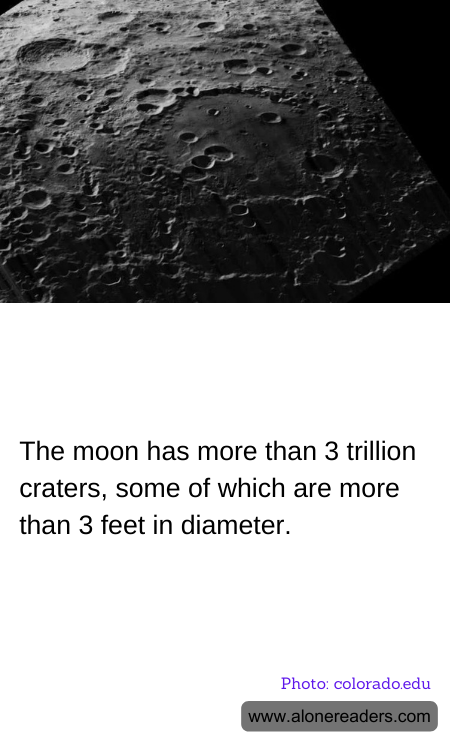
The moon, Earth's only natural satellite, has long fascinated humanity with its serene glow and mysterious surface. One of the most intriguing aspects of the moon is its heavily cratered landscape. Recent studies and observations have revealed that the moon is home to more than 3 trillion craters, a staggering number that speaks to its tumultuous history. These craters vary in size, with some exceeding three feet in diameter, offering a glimpse into the moon's past and the dynamic processes that have shaped it over billions of years.
The formation of these craters is primarily the result of impacts from meteoroids, asteroids, and comets. Unlike Earth, the moon lacks a protective atmosphere, making it vulnerable to these celestial collisions. Over time, these impacts have left their mark, creating a pockmarked surface that tells a story of cosmic violence and celestial events. The absence of weathering processes, such as wind and rain, means that these craters remain largely unchanged, preserving a record of the solar system's history.
The sheer number of craters on the moon is a testament to the frequency of impacts it has endured. While many of these craters are small, measuring just a few inches across, others are significantly larger, with diameters spanning several miles. The largest craters, known as basins, can be hundreds of miles wide and are often surrounded by mountain ranges formed by the force of the impact. These massive craters provide valuable insights into the moon's geological history and the forces that have shaped its surface.
Exploring the moon's craters has been a key focus of lunar missions, both manned and unmanned. These missions have provided scientists with crucial data, helping to unravel the mysteries of the moon's formation and evolution. By studying the composition and distribution of craters, researchers can infer the age of different lunar regions and gain a better understanding of the moon's geological timeline. This information is not only vital for lunar science but also enhances our knowledge of planetary processes across the solar system.
The moon's craters also hold potential for future exploration and utilization. Some craters, particularly those located at the poles, are believed to contain water ice, a resource that could be crucial for sustaining human presence on the moon. As space agencies and private companies plan for future lunar missions, understanding the distribution and composition of these craters will be essential for identifying suitable landing sites and resources.
In conclusion, the moon's more than 3 trillion craters offer a captivating window into the history of our solar system. Each crater, whether large or small, contributes to the moon's unique landscape and provides valuable information about the processes that have shaped it. As we continue to explore and study the moon, these craters will remain a focal point of scientific inquiry, unlocking secrets of the past and paving the way for future exploration.
