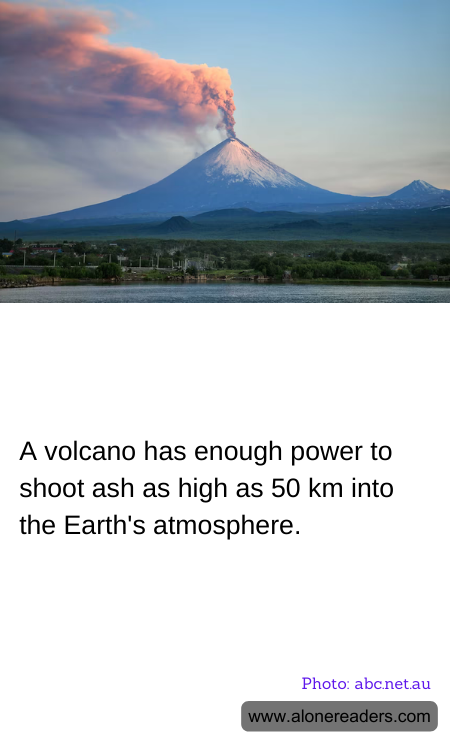
Volcanoes are among the most awe-inspiring and powerful natural phenomena on Earth. Their ability to reshape landscapes and influence global climates is a testament to the immense forces at play beneath the Earth's crust. One of the most dramatic displays of a volcano's power is its ability to shoot ash high into the atmosphere, sometimes reaching altitudes of up to 50 kilometers. This extraordinary capability not only captures the imagination but also has significant implications for the environment and human life.
When a volcano erupts, it releases a mixture of gases, ash, and volcanic rock into the air. The intensity of an eruption can vary greatly, but in the most powerful cases, the volcanic plume can penetrate the stratosphere, the second major layer of Earth's atmosphere. Reaching heights of 50 kilometers, these plumes can have far-reaching effects. The ash particles, composed of tiny fragments of volcanic glass and minerals, can spread over vast distances, carried by atmospheric winds. This can lead to widespread disruption, affecting air travel, agriculture, and even climate patterns.
The eruption of Mount Pinatubo in the Philippines in 1991 is a prime example of a volcanic event with global consequences. The ash and sulfur dioxide released into the atmosphere formed a layer of aerosols that circled the globe, leading to a temporary cooling of the Earth's surface by about 0.5 degrees Celsius. This demonstrates how volcanic eruptions can influence global temperatures and weather patterns, albeit temporarily. Such events remind us of the interconnectedness of Earth's systems and the potential for natural phenomena to impact life on a global scale.
While the immediate effects of a volcanic eruption can be devastating, with lava flows, pyroclastic surges, and ashfall posing significant hazards to nearby communities, the long-term impacts can be equally profound. The ash that reaches high altitudes can remain suspended for months or even years, gradually settling and affecting air quality and visibility. This can have implications for human health, as fine ash particles can be inhaled, leading to respiratory issues.
Despite the potential dangers, volcanic eruptions also play a crucial role in shaping the Earth's environment. They contribute to the formation of new land, enrich soils with minerals, and even create opportunities for geothermal energy. Understanding the power and behavior of volcanoes is essential for mitigating risks and harnessing their benefits. Scientists continue to study volcanic activity, using advanced technology to monitor eruptions and predict their impacts, striving to protect communities and minimize disruption.
In conclusion, the ability of a volcano to shoot ash as high as 50 kilometers into the Earth's atmosphere is a remarkable demonstration of nature's power. While these events can pose significant challenges, they also offer valuable insights into the dynamic processes that shape our planet. By studying and respecting these natural phenomena, we can better prepare for their impacts and appreciate the vital role they play in Earth's complex systems.
