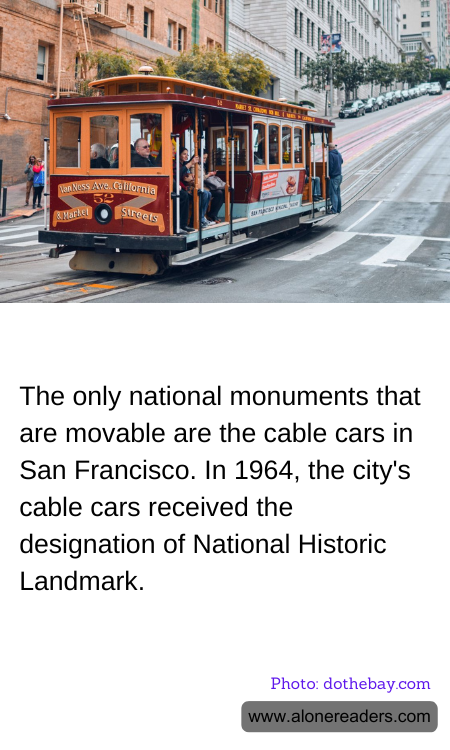
San Francisco's iconic cable cars are more than just a mode of transportation; they are a moving testament to the city's rich history and innovation. In 1964, these beloved vehicles were designated as a National Historic Landmark, making them the only national monuments in the United States that are movable. This unique status underscores their cultural and historical significance, not only to San Francisco but to the nation as a whole.
The story of the cable cars dates back to the late 19th century, when Andrew Smith Hallidie, inspired by witnessing horses struggling on the city's steep hills, developed the first cable car system. The inaugural run took place on Clay Street in 1873, and the system quickly expanded, becoming an integral part of San Francisco's urban landscape. The cable cars were revolutionary, offering a reliable and efficient means of navigating the city's challenging topography.
Over the years, the cable cars have survived numerous challenges, including the devastating 1906 earthquake and fire, which destroyed much of the city. Despite these adversities, the cable cars continued to operate, symbolizing resilience and endurance. However, by the mid-20th century, the rise of automobiles and buses threatened their existence. It was the passionate advocacy of San Francisco's citizens that ultimately saved the cable cars from being phased out, leading to their designation as a National Historic Landmark.
Today, the cable cars remain a cherished symbol of San Francisco, attracting millions of tourists each year who are eager to experience a ride on these historic vehicles. The system currently operates three lines: the Powell-Hyde, Powell-Mason, and California Street lines, each offering breathtaking views of the city's iconic landmarks, including Alcatraz Island, the Golden Gate Bridge, and Fisherman's Wharf. Riding a cable car is not just a journey through the city but a journey through time, offering a glimpse into the past while traversing the vibrant streets of the present.
The designation of the cable cars as a National Historic Landmark ensures their preservation for future generations. It highlights the importance of maintaining historical artifacts that continue to serve a functional purpose in modern society. The cable cars are a living museum, a testament to human ingenuity and the enduring spirit of a city that has always embraced progress while honoring its past.
In essence, San Francisco's cable cars are more than just a means of transportation; they are a moving monument to the city's history, culture, and resilience. Their designation as a National Historic Landmark not only preserves their legacy but also celebrates the unique character of San Francisco, a city where history and innovation move hand in hand.
