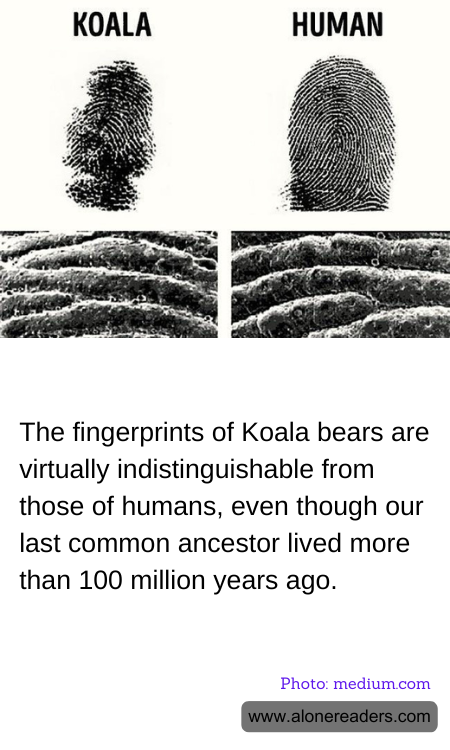
In the vast tapestry of nature, few facts are as intriguing as the striking similarity between the fingerprints of koala bears and humans. Despite the evolutionary divergence that occurred over 100 million years ago, the fingerprints of these marsupials are virtually indistinguishable from our own. This remarkable resemblance offers a fascinating glimpse into the complexities of evolution and the surprising ways in which different species can develop similar traits.
Koalas, native to Australia, are often celebrated for their adorable appearance and unique lifestyle, spending most of their lives perched in eucalyptus trees. However, beneath their furry exterior lies a surprising anatomical feature: fingerprints that closely mimic those of humans. This similarity is so pronounced that even forensic experts can struggle to differentiate between the two under a microscope. The presence of such intricate patterns on koala fingers raises intriguing questions about the evolutionary processes that led to their development.
The phenomenon of similar traits evolving independently in different species is known as convergent evolution. In the case of koalas and humans, the development of fingerprints likely served a similar functional purpose. For humans, fingerprints enhance our ability to grip and manipulate objects, a crucial adaptation for tool use and daily activities. Similarly, for koalas, these ridged patterns may improve their grip on the smooth bark of eucalyptus trees, aiding in their arboreal lifestyle. This convergence suggests that despite the vast evolutionary distance, similar environmental pressures can lead to the emergence of comparable adaptations.
The study of koala fingerprints not only highlights the wonders of convergent evolution but also underscores the importance of biodiversity and the interconnectedness of life on Earth. It serves as a reminder that even species as seemingly different as koalas and humans can share unexpected similarities. This connection fosters a deeper appreciation for the natural world and the intricate web of life that binds us all.
In a broader context, the fingerprint similarity between koalas and humans also emphasizes the need for conservation efforts. Koalas face numerous threats, including habitat destruction, climate change, and disease. Protecting these unique creatures and their habitats ensures the preservation of their remarkable traits and the continued study of their evolutionary history. By safeguarding koalas, we not only protect a beloved species but also preserve a living testament to the wonders of evolution.
In conclusion, the near-identical fingerprints of koalas and humans serve as a captivating example of convergent evolution, illustrating how different species can develop similar traits in response to comparable environmental challenges. This fascinating similarity invites us to marvel at the intricacies of nature and reinforces the importance of conserving the diverse tapestry of life on our planet. As we continue to explore the mysteries of evolution, the story of koala fingerprints reminds us of the shared threads that connect all living beings.
