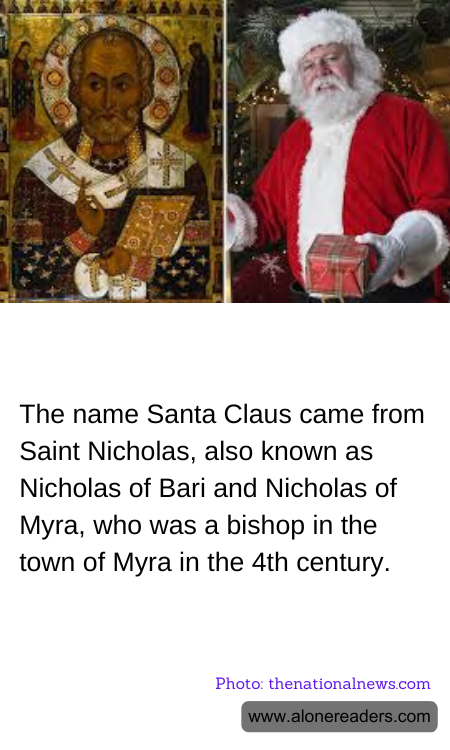
The name Santa Claus, a beloved figure associated with the joy and magic of Christmas, has its origins in the historical figure of Saint Nicholas. Known also as Nicholas of Bari and Nicholas of Myra, he was a bishop in the town of Myra, located in what is now modern-day Turkey, during the 4th century. Saint Nicholas was renowned for his generosity, compassion, and the many miracles attributed to him, which laid the foundation for the legend of Santa Claus that we know today.
Saint Nicholas was born around 280 AD in the village of Patara, a region that was part of Greece at the time. He was raised in a devout Christian family and was known for his piety from a young age. After losing his parents to an epidemic, Nicholas used his inheritance to help the poor and needy, a practice that would define his life. His reputation for kindness and his dedication to the Christian faith led to his appointment as the Bishop of Myra.
One of the most famous stories about Saint Nicholas tells of how he helped a poor man with three daughters. The man could not afford a dowry for his daughters, which meant they were unlikely to marry and might be sold into servitude. Hearing of the man's plight, Nicholas decided to help. Under the cover of night, he secretly threw bags of gold through the man's window, which landed in stockings or shoes left by the fire to dry. This act of kindness is believed to be the origin of the tradition of hanging stockings by the fireplace during Christmas.
Saint Nicholas's reputation as a gift-giver spread throughout Europe, and he became the patron saint of children, sailors, and a host of other groups. Over the centuries, his legend grew, and he became a symbol of selfless giving. In the Netherlands, he was known as Sinterklaas, a name that would eventually evolve into Santa Claus as Dutch settlers brought the tradition to America.
The transformation of Saint Nicholas into the modern-day Santa Claus was further shaped by literature and popular culture. In the 19th century, the poem "A Visit from St. Nicholas," more commonly known as "The Night Before Christmas," depicted Santa as a jolly, plump figure who traveled in a sleigh pulled by reindeer, delivering gifts to children around the world. This image was solidified by the illustrations of Thomas Nast, a political cartoonist, who drew Santa as a cheerful, bearded man in a red suit.
Today, Santa Claus is a universal symbol of the holiday season, embodying the spirit of giving and joy. While the modern image of Santa may differ from the historical Saint Nicholas, the core values of generosity and kindness remain at the heart of both figures. As we celebrate the festive season, the story of Saint Nicholas reminds us of the enduring power of compassion and the impact of selfless acts of kindness.
