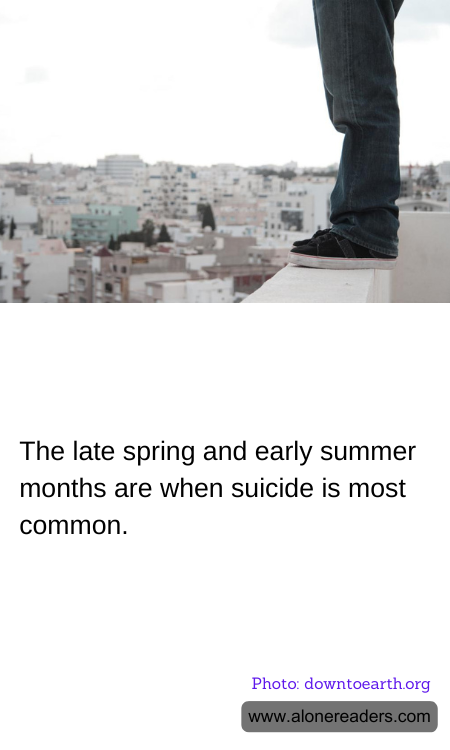
When we think of the changing seasons, we often associate spring and early summer with renewal, growth, and vitality. The blooming flowers, longer days, and warmer temperatures typically evoke feelings of joy and optimism. However, it is during these months that a surprising and somber statistic emerges: the rates of suicide tend to peak. This phenomenon challenges the common perception that the darker, colder months are when individuals are most vulnerable to feelings of despair.
The reasons behind this seasonal pattern are complex and multifaceted. One contributing factor may be the contrast between the external environment and an individual's internal emotional state. As nature awakens and society becomes more active, those struggling with mental health issues might feel an intensified sense of isolation or inadequacy. The pressure to feel happy and engage in social activities can exacerbate feelings of loneliness or depression, making the disparity between their internal struggles and the external world more pronounced.
Biological factors also play a role in this seasonal trend. Changes in sunlight exposure can affect the body's production of serotonin, a neurotransmitter that influences mood. While increased sunlight generally boosts serotonin levels, the transition period can be destabilizing for some individuals, leading to mood swings or heightened anxiety. Additionally, the disruption of sleep patterns due to longer daylight hours can negatively impact mental health, contributing to feelings of fatigue and irritability.
Social dynamics during late spring and early summer can further complicate matters. The end of the academic year, for instance, can bring stress and uncertainty for students facing exams, graduations, or transitions to new phases of life. Similarly, the anticipation of summer vacations or family gatherings can be a source of anxiety for those who feel disconnected or unsupported by their social networks. These pressures can compound existing mental health challenges, increasing the risk of suicidal thoughts or actions.
It is crucial to address this issue with sensitivity and awareness. Encouraging open conversations about mental health and promoting access to support services are vital steps in preventing suicide. Friends, family, and community members can play a significant role by reaching out to those who may be struggling, offering a listening ear, and fostering an environment where seeking help is normalized and encouraged.
Ultimately, understanding the seasonal patterns of suicide can help us better support those in need. By recognizing the unique challenges that late spring and early summer can present, we can work towards creating a society that is more attuned to the mental health needs of its members, ensuring that no one feels alone during these vibrant yet vulnerable months.
