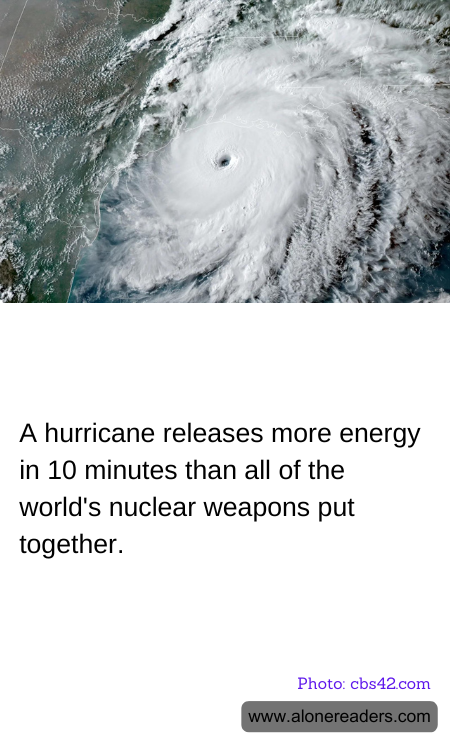
The immense power of nature is often beyond human comprehension, and hurricanes are a prime example of this formidable force. These massive storm systems, which form over warm ocean waters, can unleash a staggering amount of energy. In fact, it is estimated that a hurricane releases more energy in just 10 minutes than all of the world's nuclear weapons combined. This comparison not only highlights the sheer power of hurricanes but also underscores the importance of understanding and respecting these natural phenomena.
Hurricanes derive their energy from the warm waters of the ocean. As the sun heats the surface of the sea, water evaporates and rises, creating an area of low pressure. This process draws in more warm, moist air, which continues to rise and cool, forming clouds and thunderstorms. The energy released during this condensation process is what fuels the hurricane, allowing it to grow in size and strength. The energy output of a mature hurricane is truly mind-boggling. Scientists estimate that the heat energy released by a hurricane is equivalent to a 10-megaton nuclear bomb exploding every 20 minutes.
To put this into perspective, consider the combined explosive power of all the nuclear weapons in the world. While these weapons are capable of causing catastrophic destruction, their energy pales in comparison to that of a hurricane. The energy released by a hurricane in just a few minutes is enough to power the entire world for several days. This incredible power is a testament to the natural processes that drive these storms and serves as a reminder of the limits of human technology when faced with the forces of nature.
Understanding the energy dynamics of hurricanes is crucial for several reasons. First, it helps meteorologists predict the potential impact of these storms, allowing for better preparation and response efforts. By studying the energy output of hurricanes, scientists can improve forecasting models, which can save lives and reduce property damage. Additionally, understanding the energy mechanisms of hurricanes can contribute to broader climate studies, as these storms are influenced by changes in ocean temperatures and atmospheric conditions.
Moreover, the comparison between hurricanes and nuclear weapons serves as a powerful reminder of the need for environmental stewardship. As climate change continues to affect global weather patterns, the frequency and intensity of hurricanes may increase. This potential escalation underscores the importance of reducing greenhouse gas emissions and taking proactive measures to mitigate the impacts of climate change.
In conclusion, the energy released by hurricanes is a testament to the awe-inspiring power of nature. While the comparison to nuclear weapons highlights the magnitude of this energy, it also serves as a reminder of the need for respect and preparedness in the face of such formidable natural forces. By continuing to study and understand hurricanes, we can better protect ourselves and our planet from their potentially devastating impacts.
