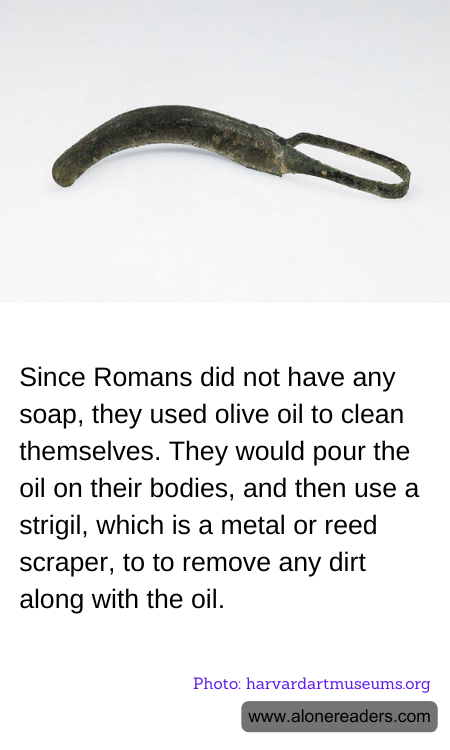
In the ancient world, the Romans were known for their advanced engineering, architecture, and societal organization. However, one aspect of their daily life that often intrigues modern audiences is their approach to personal hygiene. Unlike today, where soap is a staple in every household, the Romans had a different method for keeping themselves clean. They relied on olive oil and a tool called a strigil to maintain their hygiene.
Olive oil, a staple in the Mediterranean diet, was also a crucial element in Roman bathing rituals. The Romans would begin their cleansing process by generously applying olive oil to their skin. This might seem unusual to us today, but olive oil was readily available and served as an effective means to loosen dirt and grime from the body. The oil would penetrate the skin, lifting impurities and providing a moisturizing effect, which was particularly beneficial in the dry Mediterranean climate.
Once the olive oil was applied, the Romans would use a strigil to scrape it off. A strigil is a curved metal or reed tool designed to remove the oil along with any dirt and dead skin cells. This process was not only practical but also a social activity. Public baths, or thermae, were common in Roman cities, and people would gather there not just to clean themselves but also to socialize and relax. The act of scraping the skin with a strigil was often done by slaves or attendants, highlighting the social hierarchy of the time.
The use of olive oil and strigils was more than just a method of cleaning; it was a ritual that emphasized the importance of grooming and appearance in Roman society. This practice also reflects the Romans' resourcefulness and adaptability, as they made use of the materials available to them to meet their needs. The absence of soap did not deter them from maintaining cleanliness, and their innovative approach laid the groundwork for future advancements in personal hygiene.
Today, the Roman method of using olive oil and a strigil might seem foreign, but it offers insight into the daily lives of one of history's most influential civilizations. It reminds us that while technology and products may change, the fundamental human desire for cleanliness and social interaction remains constant. The Roman bathing ritual is a testament to their ingenuity and their ability to turn a simple act into a sophisticated social custom.
