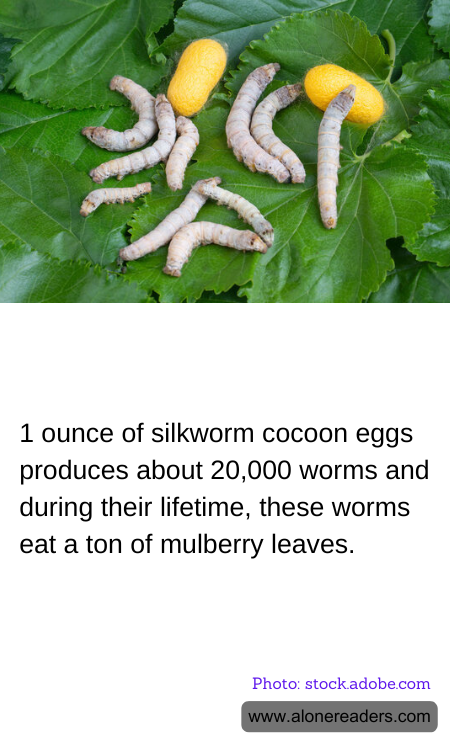
Silkworms, the humble architects of one of the most luxurious fabrics known to humanity, have a fascinating lifecycle that begins with a tiny egg. From just one ounce of silkworm cocoon eggs, approximately 20,000 silkworms can emerge, each embarking on a journey that will culminate in the production of silk. This remarkable transformation from egg to silk-producing worm is not only a marvel of nature but also a testament to the intricate balance of life and the environment.
The lifecycle of a silkworm begins when the eggs hatch into larvae, which are more commonly known as silkworms. These larvae have an insatiable appetite for mulberry leaves, their primary source of nutrition. Over the course of their short lives, these 20,000 worms collectively consume an astonishing amount of foliage—up to a ton of mulberry leaves. This voracious feeding is crucial, as it provides the necessary nutrients for the worms to grow and eventually spin their silk cocoons.
The relationship between silkworms and mulberry trees is a perfect example of nature's interdependence. Mulberry leaves are rich in nutrients that are essential for the growth and development of silkworms. In turn, the cultivation of mulberry trees is often closely linked to sericulture, the practice of rearing silkworms for silk production. This symbiotic relationship highlights the importance of sustainable agricultural practices that ensure the health of both the silkworms and their leafy food source.
As the silkworms grow, they undergo several molts, shedding their skin to accommodate their increasing size. After about four to six weeks of continuous feeding, the silkworms are ready to spin their cocoons. Each worm produces a single, continuous thread of silk that can be up to a mile long. This silk thread is what eventually gets harvested and processed into the luxurious fabric that has been prized for centuries.
The process of transforming mulberry leaves into silk is a testament to the wonders of nature and the ingenuity of human cultivation. It underscores the importance of maintaining ecological balance and highlights the intricate connections between living organisms and their environment. For centuries, silk has been a symbol of elegance and sophistication, and understanding the journey from egg to silk thread adds a layer of appreciation for this exquisite material.
In conclusion, the lifecycle of the silkworm is a remarkable example of nature's complexity and beauty. From a single ounce of eggs, 20,000 worms emerge, consuming a ton of mulberry leaves to produce the silk that has captivated human imagination for millennia. This process not only showcases the wonders of the natural world but also serves as a reminder of the delicate balance that sustains life on our planet.
