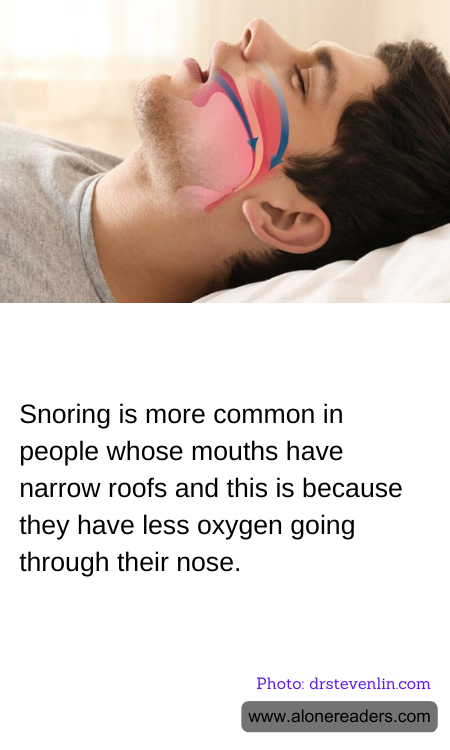
Snoring is a common phenomenon that affects millions of people worldwide, often disrupting not only the sleep of the snorer but also that of their partners. While there are numerous factors that contribute to snoring, recent studies have highlighted a particular anatomical feature that may play a significant role: the shape of the roof of the mouth, or the palate. Individuals with narrow palates are more prone to snoring, and this is largely due to the reduced airflow through their nasal passages.
The structure of the mouth and nasal passages is crucial in determining how air flows during breathing. In people with narrow palates, the space available for air to pass through is limited. This constriction can lead to increased resistance and turbulence as air moves through the nose and throat, causing the tissues in these areas to vibrate. These vibrations are what produce the characteristic sound of snoring. When the roof of the mouth is narrow, it often correlates with a smaller nasal cavity, which further restricts airflow and exacerbates the problem.
Moreover, the reduced airflow in individuals with narrow palates means that less oxygen is being delivered through the nose. This can lead to mouth breathing, especially during sleep, which is another common cause of snoring. When the mouth is open, the tongue and soft tissues in the throat are more likely to collapse and obstruct the airway, leading to increased snoring. This cycle of restricted airflow and mouth breathing can significantly impact the quality of sleep, leading to daytime fatigue and other health issues.
Addressing snoring in individuals with narrow palates often involves a multi-faceted approach. Lifestyle changes such as maintaining a healthy weight, avoiding alcohol before bedtime, and sleeping on one's side can help reduce snoring. In some cases, medical interventions may be necessary. Devices such as nasal dilators or mandibular advancement devices can help keep the airway open. In more severe cases, surgical options may be considered to widen the palate or remove excess tissue from the throat.
Understanding the link between the structure of the mouth and snoring can be crucial for effective treatment. For those who suspect that a narrow palate might be contributing to their snoring, consulting with a healthcare professional or a sleep specialist can provide valuable insights and potential solutions. By addressing the root cause of snoring, individuals can improve their sleep quality and overall well-being, benefiting both themselves and those around them.
