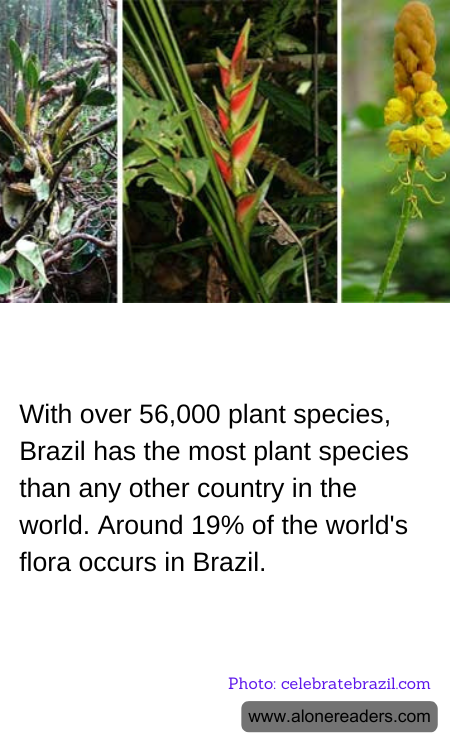
Brazil, a country renowned for its vibrant culture and breathtaking landscapes, holds another remarkable distinction: it is home to the most diverse plant life on the planet. With over 56,000 plant species, Brazil boasts a botanical richness that surpasses any other nation. This extraordinary diversity accounts for approximately 19% of the world's flora, making Brazil an invaluable reservoir of plant biodiversity.
The vast array of plant species in Brazil is largely attributed to its varied ecosystems, which include the Amazon Rainforest, the Atlantic Forest, the Cerrado, the Pantanal, and the Caatinga. Each of these regions offers unique environmental conditions that foster the growth of distinct plant communities. The Amazon Rainforest, often referred to as the "lungs of the Earth," is the largest tropical rainforest in the world and is home to an astonishing variety of trees, shrubs, and flowering plants. This lush environment supports countless species, many of which are yet to be studied or even discovered.
The Atlantic Forest, though significantly reduced from its original expanse, remains a hotspot of biodiversity with a high level of endemism. This means that many of the plant species found here are not found anywhere else on the planet. The Cerrado, a vast tropical savanna, is another critical area for plant diversity, characterized by its unique flora adapted to withstand periodic fires and droughts. Meanwhile, the Pantanal, the world's largest tropical wetland, and the semi-arid Caatinga region contribute their own unique plant species to Brazil's rich tapestry of flora.
Brazil's plant diversity is not only a natural wonder but also a crucial component of the global ecosystem. These plants play essential roles in carbon sequestration, climate regulation, and providing habitat for countless animal species. Moreover, they are a source of food, medicine, and raw materials for local communities and industries. The potential for discovering new medicinal compounds from Brazil's plant species is immense, offering hope for breakthroughs in treating various diseases.
However, this botanical treasure trove faces significant threats from deforestation, agriculture expansion, and climate change. The loss of habitat due to these factors poses a severe risk to the survival of many plant species, some of which are already endangered. Conservation efforts are vital to preserving Brazil's plant diversity, ensuring that future generations can continue to benefit from and marvel at this natural heritage.
In conclusion, Brazil's status as the country with the most plant species in the world underscores the importance of protecting its diverse ecosystems. The country's flora is not only a testament to the beauty and complexity of nature but also a critical component of the Earth's ecological balance. As we strive to safeguard our planet's biodiversity, Brazil's plant species stand as a reminder of the richness and fragility of life on Earth.
