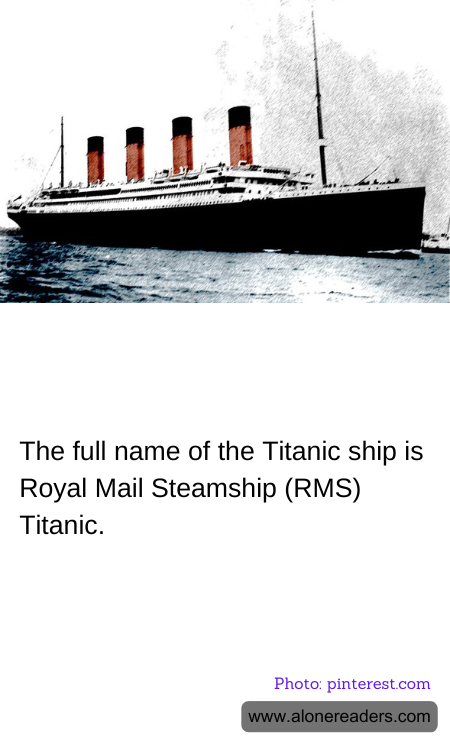
The Titanic, a name that resonates with both historical significance and tragic lore, is often simply referred to as "Titanic." However, its full name is the Royal Mail Steamship (RMS) Titanic. This designation is not just a formality but a reflection of the ship's intended purpose and the era in which it was built. The prefix "RMS" stands for Royal Mail Ship, a title given to vessels that were contracted to carry mail for the British Royal Mail. This was a prestigious designation, indicating that the ship was part of a select group entrusted with the important task of transporting mail across the seas.
The RMS Titanic was a marvel of early 20th-century engineering, representing the pinnacle of luxury and technological advancement at the time. Built by the White Star Line, the Titanic was designed to be the largest and most luxurious passenger liner ever constructed. Its construction began in 1909 at the Harland and Wolff shipyard in Belfast, Ireland, and it was launched in 1911. The ship was equipped with advanced safety features, including watertight compartments and remotely activated watertight doors, which were considered state-of-the-art at the time.
Despite its grandeur and the confidence placed in its design, the Titanic's maiden voyage ended in tragedy. On April 10, 1912, the ship set sail from Southampton, England, bound for New York City. On the night of April 14, 1912, the Titanic struck an iceberg in the North Atlantic Ocean. The collision caused the ship to sink in the early hours of April 15, resulting in the loss of more than 1,500 lives. The disaster was a profound shock to the world and led to significant changes in maritime regulations, including improved lifeboat requirements and the establishment of the International Ice Patrol.
The story of the RMS Titanic has captivated the public imagination for over a century. It has been the subject of countless books, films, and documentaries, each exploring different facets of the ship's story, from the opulence of its first-class accommodations to the heroism and tragedy of its final hours. The Titanic's legacy endures as a symbol of human ambition and the limits of technological prowess.
Today, the RMS Titanic is remembered not only for its tragic end but also for its role in shaping maritime history. The lessons learned from its sinking have contributed to safer sea travel and have ensured that the Titanic's story continues to be told to new generations. As we reflect on the legacy of the RMS Titanic, we are reminded of the enduring impact of this iconic ship and the importance of remembering the past to build a safer future.
