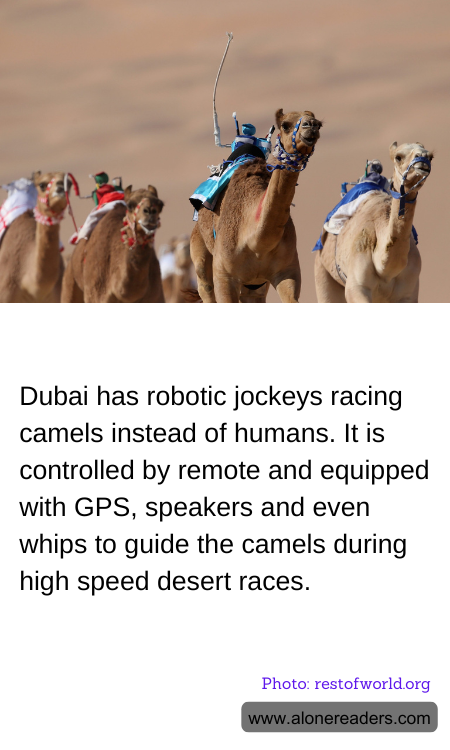
In the heart of the Arabian desert, where tradition meets innovation, Dubai has embraced a futuristic twist on one of its most cherished cultural pastimes: camel racing. Once dominated by human jockeys, this ancient sport has undergone a technological transformation with the introduction of robotic jockeys. These mechanical riders, controlled remotely, have revolutionized the way camel races are conducted, ensuring both the safety of the animals and the integrity of the sport.
The use of robotic jockeys in camel racing is a fascinating blend of technology and tradition. These robots are equipped with GPS systems, allowing handlers to track the camels' positions in real-time during races that can span several kilometers across the desert. The integration of speakers enables handlers to communicate with the camels, offering encouragement and guidance as they navigate the challenging terrain. Additionally, robotic jockeys are fitted with small whips, which can be used judiciously to maintain the camels' speed and focus, ensuring a competitive edge in these high-stakes races.
The shift from human to robotic jockeys was driven by a combination of ethical considerations and technological advancements. Historically, the use of child jockeys in camel racing had raised significant human rights concerns, prompting calls for reform. The introduction of robotic jockeys addresses these issues, providing a humane alternative that respects both human and animal welfare. This innovation not only preserves the cultural heritage of camel racing but also aligns it with modern ethical standards.
The impact of robotic jockeys extends beyond the racetrack, influencing the broader perception of camel racing in the region. By embracing technology, Dubai has positioned itself as a leader in the modernization of traditional sports, attracting global attention and fostering a renewed interest in camel racing. This technological leap has also sparked discussions about the potential for further innovations in other traditional sports, highlighting the possibilities that arise when culture and technology intersect.
For spectators, the sight of camels racing across the desert, guided by their robotic companions, is a testament to human ingenuity and adaptability. The races continue to draw crowds, both locally and internationally, offering a unique glimpse into a world where the past and future coexist harmoniously. As Dubai continues to push the boundaries of what is possible, the use of robotic jockeys in camel racing stands as a symbol of progress, demonstrating that tradition and technology can indeed race side by side.
