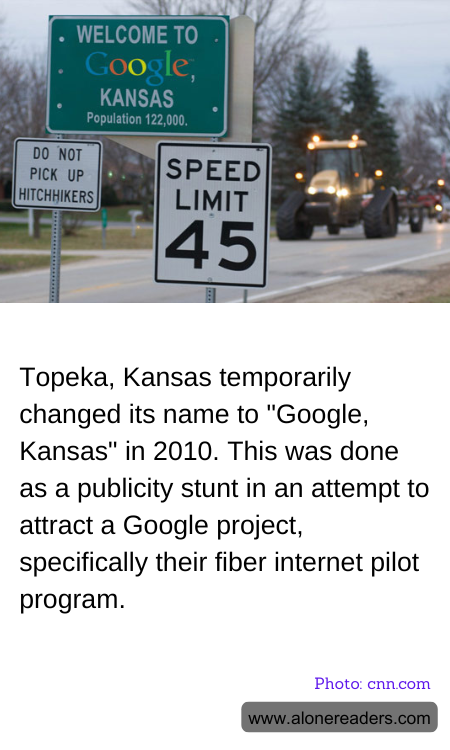
In March 2010, the city of Topeka, Kansas, made headlines with an unusual and bold move: it temporarily changed its name to "Google, Kansas." This creative publicity stunt was part of an effort to attract the attention of tech giant Google, which was in the process of selecting a location for its new fiber internet pilot program. The initiative aimed to bring ultra-high-speed internet to a select community, promising speeds up to 100 times faster than the average broadband connection available at the time.
The decision to rebrand the city was spearheaded by then-Mayor Bill Bunten, who issued a proclamation declaring that for the entire month of March, Topeka would be known as "Google, Kansas." The move was not just a playful nod to the tech company but also a strategic attempt to stand out among the hundreds of other cities vying for Google's attention. The temporary name change was part of a broader campaign to showcase Topeka's enthusiasm for innovation and its readiness to embrace cutting-edge technology.
While the name change was largely symbolic, it generated significant media coverage and brought national attention to Topeka. The city hoped that this increased visibility would highlight its potential as an ideal location for Google's ambitious project. The campaign included various community events and initiatives designed to demonstrate Topeka's commitment to technological advancement and its eagerness to partner with Google.
Despite the creative effort, Topeka was not ultimately selected for the Google Fiber project. In March 2011, Google announced that Kansas City, Kansas, would be the first city to receive the high-speed internet service. However, the campaign was not without its benefits for Topeka. The publicity surrounding the name change helped to boost the city's profile and fostered a sense of community pride and unity. It also underscored the importance of thinking outside the box and taking bold steps to achieve ambitious goals.
The story of Topeka's temporary transformation into "Google, Kansas" remains a fascinating example of how cities can leverage creativity and innovation to capture the attention of major corporations. It serves as a reminder that sometimes, unconventional approaches can lead to unexpected opportunities and successes. While Topeka may not have become the first Google Fiber city, its willingness to embrace change and take risks continues to inspire other communities seeking to make their mark in the digital age.
