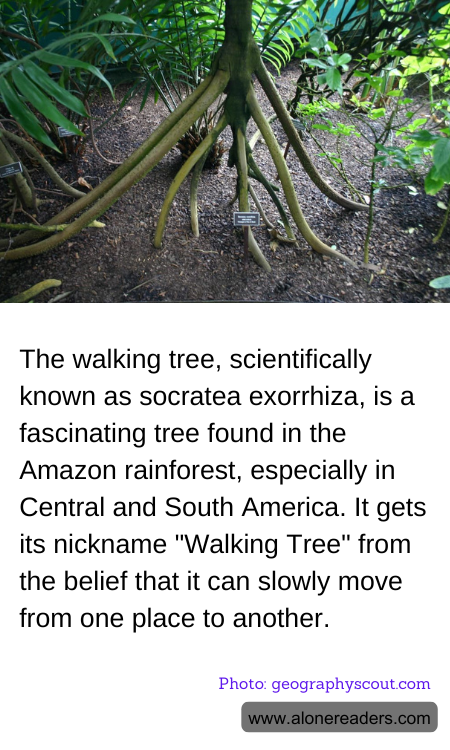
In the heart of the Amazon rainforest, a unique botanical marvel captures the imagination of scientists and nature enthusiasts alike: the Socratea exorrhiza, commonly known as the "Walking Tree." This intriguing tree, native to Central and South America, has earned its nickname from the captivating belief that it possesses the ability to move slowly across the forest floor. While the notion of a tree that walks might sound like something out of a fantasy novel, the reality is rooted in fascinating natural adaptations.
The Walking Tree is distinguished by its stilt-like roots, which elevate its trunk above the ground. These roots provide the tree with remarkable stability in the often unstable and swampy rainforest terrain. The roots also play a crucial role in the tree's purported mobility. As the tree grows, it can develop new roots in the direction of better sunlight or richer soil, while older roots die off. This gradual process gives the impression that the tree is "walking" over time, albeit at a pace that is imperceptible to the human eye.
The idea of a tree that can move has sparked considerable debate and intrigue among botanists. While the movement of the Socratea exorrhiza is not akin to the locomotion of animals, its ability to adapt to its environment by shifting its root structure is a testament to the dynamic nature of plant life. This adaptation is particularly advantageous in the dense and competitive ecosystem of the rainforest, where access to sunlight and nutrients can be a matter of survival.
Beyond its unique root system, the Walking Tree is also notable for its ecological role in the rainforest. It provides habitat and food for a variety of organisms, from insects to birds, contributing to the rich biodiversity of its environment. The tree's fruits are a source of nourishment for many animals, while its towering presence offers shelter and nesting sites.
The Socratea exorrhiza serves as a reminder of the incredible diversity and adaptability of life on Earth. Its story encourages us to look beyond the surface and appreciate the complex interactions and adaptations that enable organisms to thrive in their natural habitats. While the Walking Tree may not literally stroll through the forest, its ability to adjust and survive in a challenging environment is a remarkable feat of nature.
For visitors to the Amazon rainforest, the sight of the Walking Tree is a captivating glimpse into the wonders of the natural world. It invites us to ponder the mysteries of evolution and the intricate balance of ecosystems. As we continue to explore and understand the complexities of our planet's flora, the Socratea exorrhiza stands as a symbol of nature's ingenuity and resilience.
