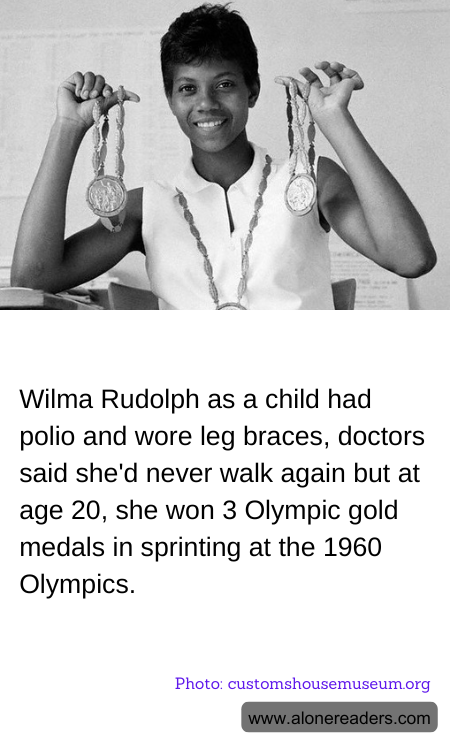
Wilma Rudolph's story is one of remarkable resilience and triumph over adversity, a narrative that continues to inspire people across generations. Born on June 23, 1940, in Saint Bethlehem, Tennessee, Wilma was the 20th of 22 siblings in a family that faced significant economic challenges. Her early life was marked by a series of health issues, the most daunting of which was polio, a crippling disease that left her with a weakened left leg. Doctors were not optimistic about her future mobility, predicting that she might never walk again without assistance.
Despite these grim forecasts, Wilma's indomitable spirit and the unwavering support of her family set the stage for a miraculous recovery. Her mother, Blanche, refused to accept the doctors' prognosis and was determined to see her daughter walk. With a regimen of physical therapy, often administered by her family at home, and a pair of leg braces, Wilma began the arduous journey toward mobility. By the age of 12, through sheer determination and relentless practice, she defied the odds and shed her braces, walking and eventually running with ease.
Wilma's entry into the world of athletics was serendipitous. Her natural talent for running was discovered during her high school years, and she quickly became a standout athlete. Her speed and agility caught the attention of Ed Temple, the track coach at Tennessee State University, who nurtured her burgeoning talent. Under his guidance, Wilma honed her skills and developed the competitive edge that would propel her onto the world stage.
The pinnacle of Wilma Rudolph's athletic career came at the 1960 Summer Olympics in Rome. At just 20 years old, she became the first American woman to win three gold medals in a single Olympic Games. Her victories in the 100 meters, 200 meters, and 4x100 meter relay not only shattered records but also challenged societal norms, as she became an international symbol of black excellence and female empowerment during a time of significant social change.
Wilma's achievements transcended the realm of sports. She became a beacon of hope and a role model for overcoming adversity, demonstrating that with perseverance and determination, seemingly insurmountable obstacles can be overcome. Her legacy extends beyond her Olympic triumphs, as she dedicated her post-athletic career to education and community service, inspiring countless young people to pursue their dreams regardless of the challenges they face.
Wilma Rudolph's life story is a testament to the power of the human spirit. Her journey from a child with polio to an Olympic champion is a powerful reminder that with courage, support, and unwavering resolve, anything is possible. Her legacy continues to inspire and motivate people around the world, proving that the greatest victories often come from the most challenging beginnings.
