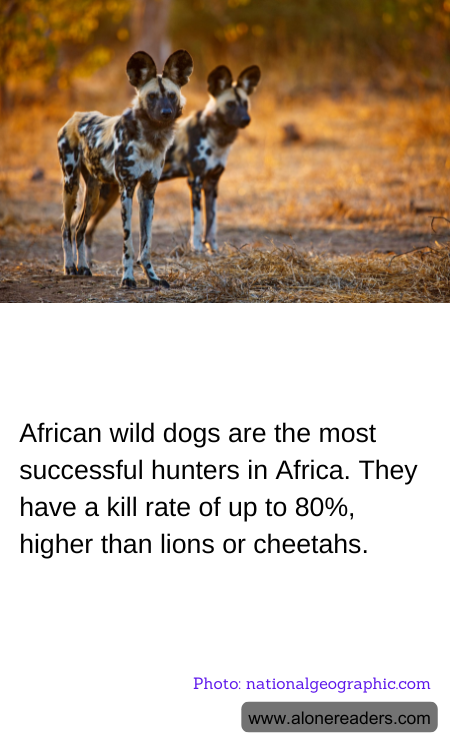
In the vast and diverse landscapes of Africa, where the struggle for survival is a daily reality, one species stands out as the most efficient predator: the African wild dog. Known for their strikingly beautiful coats and highly social behavior, these remarkable animals boast a hunting success rate that far surpasses that of their more famous counterparts, such as lions and cheetahs. With a kill rate of up to 80%, African wild dogs are the continent's most successful hunters, a testament to their exceptional teamwork and strategic prowess.
African wild dogs, also known as painted wolves due to their mottled fur, are social animals that live in packs typically ranging from 6 to 20 individuals. This social structure is central to their hunting success. Unlike solitary predators, wild dogs rely on cooperation and coordination to bring down prey, which often includes antelope species like impalas and gazelles. Their hunts are meticulously organized, with each member of the pack playing a specific role. Some dogs are responsible for chasing and tiring out the prey, while others are tasked with cutting off escape routes. This level of teamwork ensures that their hunts are not only successful but also efficient.
One of the key factors contributing to the wild dogs' high success rate is their incredible stamina and speed. Capable of reaching speeds of up to 44 miles per hour, they can maintain a relentless pursuit over long distances, often outlasting their prey. This endurance, combined with their strategic hunting techniques, allows them to close in on their targets with precision. Unlike lions, which rely on stealth and power, or cheetahs, which depend on short bursts of speed, wild dogs employ a combination of endurance and strategy, making them formidable hunters.
The success of African wild dogs is not just a result of their physical abilities but also their communication skills. They use a series of vocalizations, body language, and even facial expressions to coordinate their movements and strategies during a hunt. This level of communication is rare among predators and highlights the intelligence and adaptability of these animals. Their ability to work together harmoniously is a crucial element of their hunting prowess, ensuring that each hunt is a collective effort with a high likelihood of success.
Despite their remarkable hunting abilities, African wild dogs face numerous challenges in the wild. Habitat loss, human-wildlife conflict, and diseases such as rabies and distemper have led to a decline in their populations. Conservation efforts are crucial to ensuring the survival of these extraordinary animals, whose presence is vital to maintaining the ecological balance in their habitats.
In conclusion, African wild dogs are not only the most successful hunters in Africa but also a symbol of the power of cooperation and strategy in the animal kingdom. Their impressive kill rate is a testament to their unique social structure, endurance, and intelligence. As we continue to learn more about these fascinating creatures, it is essential to support conservation efforts that protect them and the ecosystems they inhabit.
