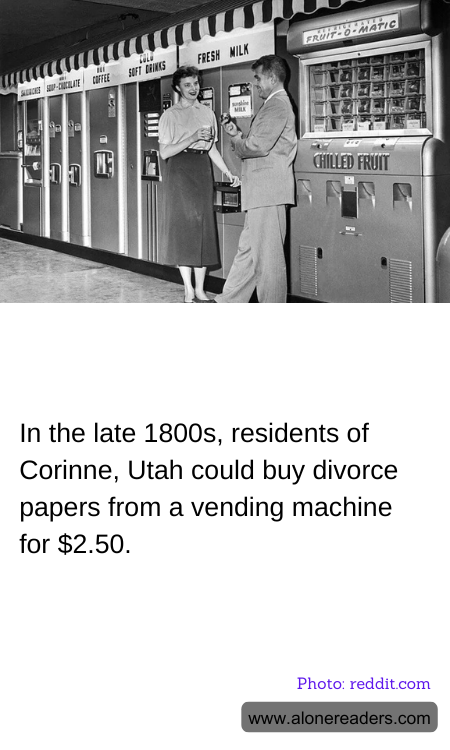
In the late 1800s, the small town of Corinne, Utah, became an unlikely symbol of progressive thinking and convenience in the realm of marital dissolution. At a time when divorce was often stigmatized and legally cumbersome, Corinne offered a unique solution that was both innovative and controversial: divorce papers available from a vending machine for the modest sum of $2.50.
Corinne, founded in 1869, was a bustling railroad town that quickly became known for its liberal attitudes, especially in contrast to the predominantly Mormon communities surrounding it. This openness to new ideas and practices made Corinne a haven for those seeking a fresh start, including individuals looking to dissolve their marriages with minimal fuss. The introduction of a vending machine dispensing divorce papers was a reflection of this progressive spirit, offering a straightforward and accessible means for individuals to take control of their marital status.
The concept of vending machines was still relatively novel in the late 19th century, primarily used for dispensing small, everyday items. However, Corinne's adaptation of this technology for legal documents was groundbreaking. For $2.50, a person could obtain the necessary paperwork to initiate a divorce, bypassing the often lengthy and expensive legal processes that were typical elsewhere. This innovation not only simplified the procedure but also democratized it, making divorce more accessible to those who might not have had the means to pursue it through traditional legal channels.
While the vending machine solution was practical, it was not without its critics. Many viewed it as a trivialization of marriage, reducing a solemn commitment to a mere transaction. Others feared it would lead to a rise in divorces, undermining the social fabric. Despite these concerns, the service was popular among those who valued the autonomy and efficiency it provided.
The availability of divorce papers in a vending machine in Corinne is a fascinating footnote in the history of marriage and divorce in America. It highlights a period of transition, where societal norms were being challenged and redefined. This small town's bold experiment in making divorce more accessible reflects broader changes in attitudes towards marriage and personal freedom that were beginning to take root across the country.
Today, the idea of obtaining legal documents from a vending machine might seem quaint or even humorous, but it underscores an important historical moment when technology and social progress intersected in unexpected ways. Corinne's innovative approach to divorce is a reminder of how communities can adapt to changing times, offering solutions that reflect the needs and values of their residents. As we look back on this unique chapter in history, it serves as a testament to the enduring human desire for autonomy and the pursuit of happiness, even in the most personal aspects of life.
