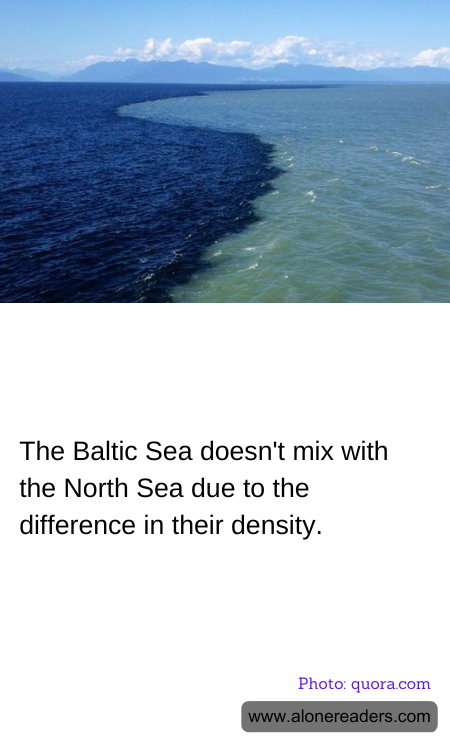
The Baltic Sea and the North Sea are two distinct bodies of water that meet in a fascinating natural phenomenon. Despite their proximity, these seas do not mix easily due to the significant difference in their water densities. This intriguing occurrence is a result of various environmental factors and has implications for the marine ecosystems and human activities in the region.
The Baltic Sea is a semi-enclosed body of water that is almost entirely surrounded by land, bordered by countries like Sweden, Finland, and Poland. It is one of the largest brackish water bodies in the world, characterized by its low salinity levels. The freshwater inflow from numerous rivers and limited exchange with the open ocean contribute to its lower salt content. In contrast, the North Sea, which lies to the west of the Baltic, is part of the Atlantic Ocean and has a much higher salinity level. This difference in salinity is the primary reason for the disparity in water density between the two seas.
When the waters of the Baltic Sea and the North Sea meet, they create a distinct boundary known as a halocline, where the less dense, fresher water of the Baltic Sea floats above the denser, saltier water of the North Sea. This boundary is not a rigid barrier but rather a dynamic interface where the two water masses interact. The mixing process is slow and occurs over a long period, influenced by factors such as wind, temperature, and the movement of ocean currents.
The unique interaction between these seas has significant ecological implications. The halocline acts as a barrier that limits the exchange of nutrients and organisms between the two bodies of water. This separation helps maintain distinct marine ecosystems, each with its own species adapted to the specific conditions of their environment. For instance, the Baltic Sea is home to species that thrive in brackish water, while the North Sea supports a diverse range of marine life accustomed to saltier conditions.
Human activities are also affected by this natural phenomenon. The limited mixing of waters can impact shipping routes, as vessels must navigate the varying salinity levels, which can affect buoyancy and stability. Additionally, the unique environmental conditions pose challenges for managing pollution and conserving marine biodiversity. Efforts to protect these seas require international cooperation and a deep understanding of the complex interactions between them.
In conclusion, the Baltic Sea and the North Sea present a remarkable example of how natural forces shape our planet's waters. The difference in their densities creates a fascinating boundary that influences both marine life and human endeavors. Understanding this phenomenon not only enriches our appreciation of the natural world but also underscores the importance of preserving these vital ecosystems for future generations.
