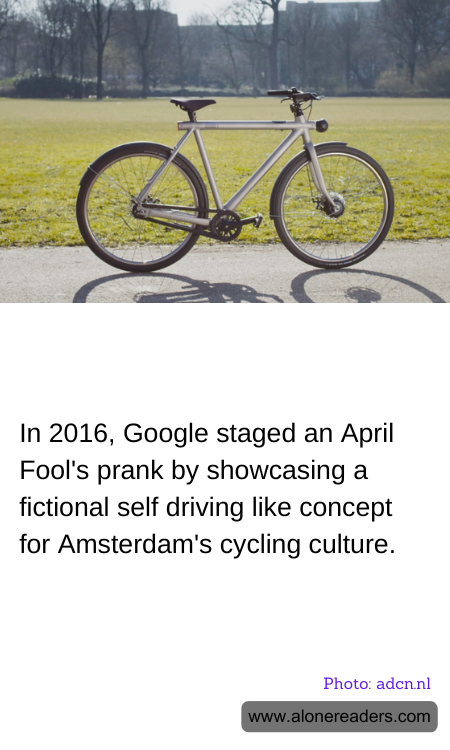
In the realm of tech companies known for their playful antics, Google has consistently stood out with its creative and often elaborate April Fool's pranks. In 2016, Google turned its attention to the cycling culture of Amsterdam, a city renowned for its extensive network of bike paths and a population that embraces cycling as a primary mode of transportation. The prank was a whimsical nod to the city's love affair with bicycles, introducing a fictional concept that combined Google's cutting-edge technology with Amsterdam's cycling tradition.
The prank unveiled a self-driving bicycle, a concept that playfully imagined a future where even bikes could benefit from autonomous technology. In a video released by Google Netherlands, the self-driving bike was depicted as a marvel of engineering, equipped with advanced sensors and software that allowed it to navigate the bustling streets of Amsterdam without human intervention. The video showcased the bike's ability to safely transport riders through the city's iconic canals and narrow lanes, all while avoiding obstacles and adhering to traffic rules.
This fictional innovation was presented with a tongue-in-cheek seriousness that added to the humor. The video featured testimonials from "users" who praised the self-driving bike for its convenience and safety. Parents expressed relief at being able to send their children to school on the bike without worry, while busy professionals appreciated the ability to multitask during their commutes. The concept even included a feature that allowed the bike to return home autonomously after dropping off its rider, a playful exaggeration that highlighted the potential of autonomous technology.
While the self-driving bike was purely a figment of Google's imagination, the prank cleverly tapped into real-world discussions about the future of transportation. As cities around the globe grapple with issues of congestion and pollution, the idea of integrating autonomous technology into everyday modes of transport is increasingly relevant. Google's prank served as a lighthearted reminder of the possibilities that lie ahead, even as it poked fun at the sometimes overzealous enthusiasm for tech-driven solutions.
The 2016 prank was well-received, drawing smiles and laughter from audiences worldwide. It was a testament to Google's ability to engage with cultural nuances and local traditions, using humor to bridge the gap between technology and everyday life. By choosing Amsterdam's cycling culture as the backdrop for their prank, Google not only celebrated the city's unique identity but also sparked conversations about the future of urban mobility.
In the end, Google's self-driving bike prank was a delightful blend of imagination and humor, capturing the spirit of innovation while playfully acknowledging the challenges and opportunities that come with technological advancement. It was a reminder that even in a world increasingly driven by technology, there's always room for a good laugh and a nod to the simple joys of life, like a leisurely bike ride through the charming streets of Amsterdam.
