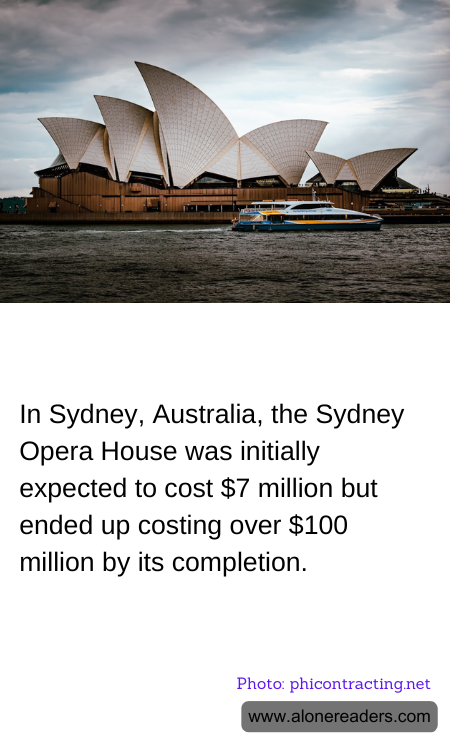
The Sydney Opera House, an iconic symbol of Australia, stands majestically on Bennelong Point, overlooking the Sydney Harbour. Its unique design and architectural brilliance make it one of the most recognizable buildings in the world. However, the journey from conception to completion was fraught with challenges, not least of which was its staggering cost overrun.
Originally, the Sydney Opera House was expected to be a relatively modest project, with an estimated budget of $7 million. This figure, however, proved to be wildly optimistic. By the time the Opera House was completed in 1973, the cost had ballooned to over $100 million. This dramatic increase in expenditure was due to a combination of factors, including ambitious design changes, technical challenges, and the complexities of constructing such an innovative structure.
The project was initially conceived in the late 1950s, when the New South Wales government launched an international design competition. Danish architect Jørn Utzon's visionary design was selected from over 200 entries. His concept featured a series of white, sail-like shells that appeared to float above the building's base, capturing the imagination of the public and the architectural community alike. However, translating this vision into reality proved to be a monumental task.
One of the primary reasons for the cost overrun was the groundbreaking nature of Utzon's design. The engineering challenges associated with constructing the Opera House's distinctive shells were unprecedented. The original plans had to be revised multiple times as engineers grappled with the complexities of the structure. This led to delays and increased costs, as new technologies and materials were developed to meet the demands of the design.
In addition to the technical challenges, there were also significant political and administrative hurdles. The project was subject to changing political climates and differing opinions on how it should be managed. Utzon himself faced numerous obstacles, including disagreements with government officials and funding issues. These tensions ultimately led to his resignation from the project in 1966, leaving the completion of the Opera House in the hands of others.
Despite these challenges, the Sydney Opera House was finally completed and officially opened by Queen Elizabeth II on October 20, 1973. Today, it stands not only as a testament to architectural innovation but also as a reminder of the complexities and unpredictabilities inherent in ambitious projects. The Opera House has since become a UNESCO World Heritage Site and continues to be a cultural hub, hosting thousands of performances and attracting millions of visitors each year.
While the cost overrun was significant, the Sydney Opera House has more than justified its expense through its cultural, economic, and symbolic contributions to Australia and the world. It serves as a powerful example of how vision and perseverance can overcome adversity, creating a legacy that transcends the challenges faced during its creation.
