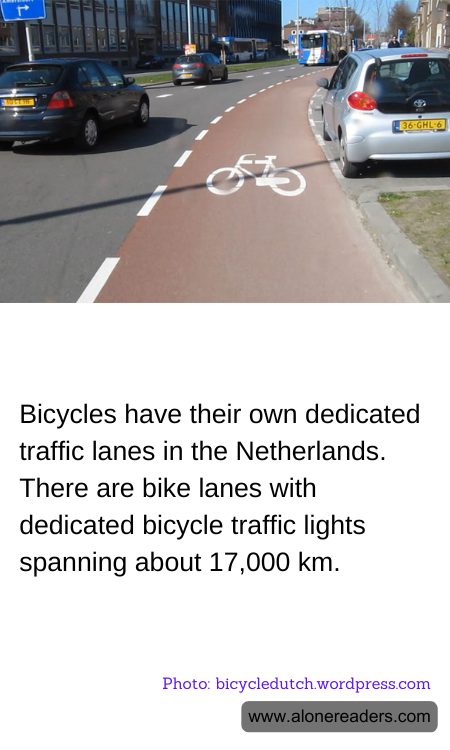
In the Netherlands, the bicycle is not just a mode of transport; it is a way of life. With a landscape that is predominantly flat and a culture that embraces cycling, the country has developed an extensive network of dedicated bike lanes that span approximately 17,000 kilometers. These lanes are not merely painted lines on the road but are thoughtfully integrated into the urban infrastructure, complete with their own traffic lights, ensuring the safety and efficiency of cyclists.
The Dutch approach to cycling infrastructure is a testament to the country's commitment to sustainable and eco-friendly transportation. The dedicated bike lanes are designed to accommodate the high volume of cyclists, providing a safe and efficient means of travel. These lanes are often separated from motor vehicle traffic by physical barriers or are located on roads with minimal car traffic, reducing the risk of accidents and making cycling a more appealing option for people of all ages.
One of the most innovative features of the Dutch cycling infrastructure is the presence of dedicated bicycle traffic lights. These lights are synchronized with the flow of traffic, allowing cyclists to move smoothly through intersections without unnecessary stops. This system not only enhances safety but also improves the overall cycling experience, encouraging more people to choose bicycles over cars for their daily commutes.
The benefits of such an extensive cycling network are manifold. For one, it significantly reduces traffic congestion in urban areas, as more people opt for bicycles instead of cars. This shift not only alleviates pressure on public transport systems but also contributes to a reduction in air pollution and greenhouse gas emissions. Moreover, cycling is a healthy form of exercise, promoting physical fitness and well-being among the population.
The Netherlands' dedication to cycling infrastructure serves as a model for other countries looking to promote sustainable transportation. By prioritizing the needs of cyclists and integrating bike lanes into the urban landscape, the Dutch have created a cycling culture that is both practical and enjoyable. This approach not only benefits the environment but also enhances the quality of life for its citizens, making the Netherlands a leader in sustainable urban planning.
In conclusion, the Netherlands' extensive network of dedicated bike lanes and bicycle traffic lights exemplifies a forward-thinking approach to urban mobility. By investing in cycling infrastructure, the country has successfully created a safe, efficient, and environmentally friendly transportation system that serves as an inspiration to the rest of the world. Whether for commuting, leisure, or exercise, cycling in the Netherlands is a testament to the power of thoughtful urban planning and a commitment to sustainability.
