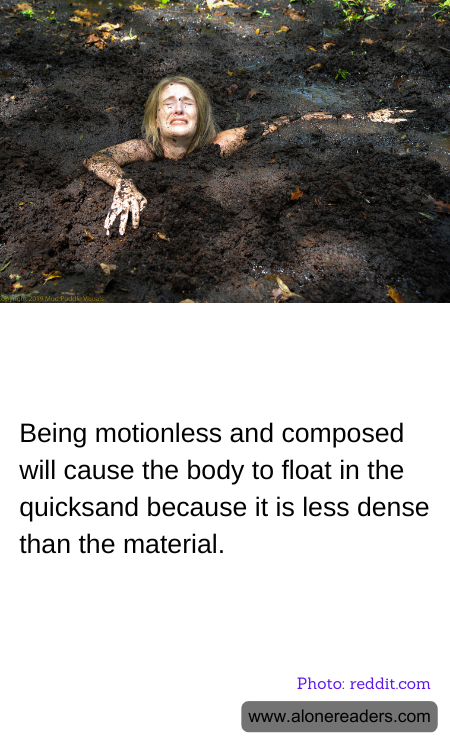
Quicksand has long been a subject of fascination and fear, often depicted in movies and literature as a perilous trap that swallows its victims whole. However, the reality of quicksand is far less dramatic and much more manageable than these portrayals suggest. Understanding the science behind quicksand can alleviate fears and provide practical knowledge for those who might encounter it. One of the most important aspects to grasp is that being motionless and composed can actually help you float in quicksand, as the human body is less dense than this intriguing material.
Quicksand is a colloid hydrogel consisting of fine granular material such as sand, clay, or silt, mixed with water. It appears solid but behaves like a liquid when disturbed. The key to surviving quicksand is understanding its density. The density of quicksand is typically around 2 grams per cubic centimeter, while the average density of the human body is about 1 gram per cubic centimeter. This means that, theoretically, the human body is less dense than quicksand, allowing it to float rather than sink.
When a person steps into quicksand, the initial reaction might be to struggle and attempt to pull themselves out. However, this can be counterproductive. Movement causes the sand and water mixture to liquefy further, making it more difficult to escape. Instead, the best course of action is to remain calm and still. By doing so, the body’s natural buoyancy will allow it to float to the surface. This is similar to floating in water; the less you move, the more you stay afloat.
To extricate oneself from quicksand, it is advisable to lean back slowly, spreading your weight over a larger surface area. This reduces the pressure on any single point and helps prevent further sinking. Once you are lying back, gently wiggle your legs to create space for water to flow in, which can help loosen the grip of the sand. Gradually, you can work your way to firmer ground by moving slowly and deliberately.
The psychological aspect of encountering quicksand is also crucial. Panic can lead to rapid movements, which exacerbate the situation. Remaining composed not only helps in maintaining buoyancy but also allows for clearer thinking and better decision-making. Understanding that quicksand is not a bottomless pit and that you can float can significantly reduce anxiety and improve your chances of a safe escape.
In conclusion, the fear of quicksand is largely based on myths and misconceptions. By staying motionless and composed, you can take advantage of the fact that the human body is less dense than quicksand, allowing you to float rather than sink. This knowledge transforms quicksand from a terrifying hazard into a manageable challenge. Whether you are an adventurer exploring the great outdoors or simply curious about natural phenomena, understanding the science of quicksand can provide peace of mind and practical skills for staying safe.
