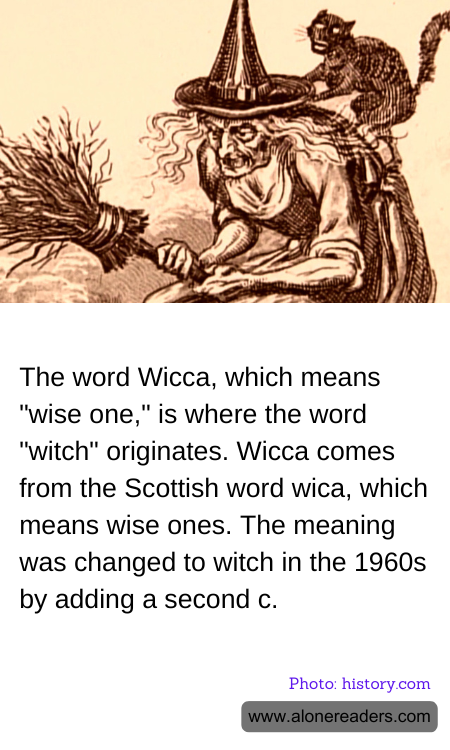
The word "witch" often conjures images of broomsticks, cauldrons, and pointed hats, but its origins are far more nuanced and rooted in ancient wisdom. The term "witch" is derived from "Wicca," a word that historically meant "wise one." This etymology traces back to the Old English word "wica," which itself has roots in the Scottish language, where it was used to describe individuals who were considered knowledgeable and wise, particularly in the realms of nature, healing, and spirituality.
In ancient times, those who were labeled as "wica" were often revered members of their communities. They were the healers, the herbalists, and the keepers of ancient lore. Their understanding of the natural world and its cycles was profound, and they played a crucial role in the health and well-being of their societies. The knowledge they possessed was passed down through generations, often orally, and was considered sacred.
However, the perception of these wise ones began to shift over the centuries. With the rise of organized religion and the spread of Christianity, practices that were once seen as beneficial and wise were increasingly viewed with suspicion. The term "witch" began to take on a more negative connotation, associated with malevolence and heresy. This transformation in meaning was further solidified in the 1960s when the word "Wicca" was adapted by modern practitioners of a nature-based religion that sought to reclaim the positive aspects of the ancient traditions. By adding a second "c," the term "Wicca" was distinguished from the pejorative "witch," allowing for a revival of interest in the old ways.
Today, Wicca is recognized as a modern pagan religion that draws inspiration from various ancient practices. It emphasizes harmony with nature, the cycles of the moon and sun, and the interconnectedness of all living things. Wiccans celebrate the Earth and its seasons through rituals and festivals, often referred to as Sabbats and Esbats. The religion is diverse, with practitioners following different traditions and paths, but all share a respect for the wisdom of the past and a commitment to living in balance with the natural world.
The journey of the word "witch" from "wise one" to its modern interpretation is a testament to the power of language and its ability to shape our understanding of history and culture. By exploring these origins, we gain a deeper appreciation for the rich tapestry of beliefs and practices that have influenced human civilization. In reclaiming the word "Wicca," modern practitioners honor the wisdom of their ancestors while forging a path that is uniquely their own.
