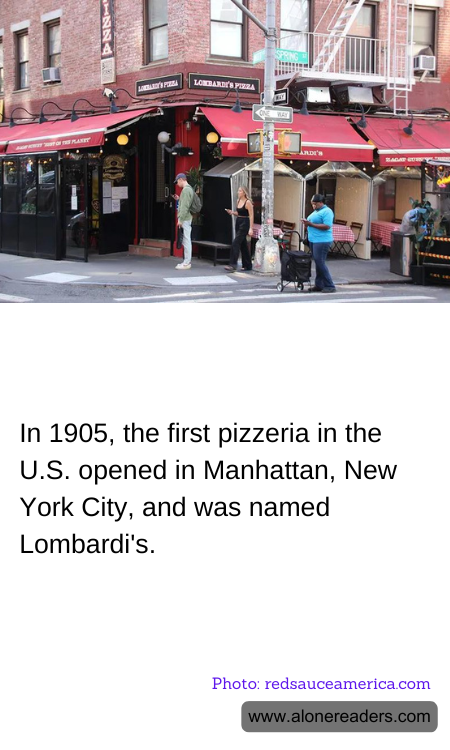
In the bustling streets of Manhattan, New York City, a culinary revolution quietly began in 1905 with the opening of Lombardi's, the first pizzeria in the United States. This modest establishment, founded by Gennaro Lombardi, would go on to become a cornerstone of American food culture, introducing the nation to the delicious simplicity of pizza.
Gennaro Lombardi, an Italian immigrant, brought with him a rich tradition of Neapolitan pizza-making. He initially started his business as a grocery store, selling tomato pies wrapped in paper and tied with a string. These early versions of pizza were a hit among the local Italian community, who craved a taste of home. Recognizing the growing demand, Lombardi decided to transform his grocery store into a full-fledged pizzeria, thus marking the birth of Lombardi's on Spring Street.
The original Lombardi's pizza was a simple yet delectable creation, featuring a thin, crispy crust topped with fresh tomato sauce, creamy mozzarella cheese, and a sprinkle of basil. Cooked in a coal-fired oven, the pizza had a distinct smoky flavor that set it apart from anything else available at the time. This unique taste quickly captured the hearts and palates of New Yorkers, transcending cultural boundaries and appealing to a diverse clientele.
Lombardi's success was not just due to its delicious offerings but also its ability to adapt and innovate. As the years went by, the pizzeria expanded its menu to include a variety of toppings, catering to the evolving tastes of its customers. Despite these changes, Lombardi's remained true to its roots, maintaining the traditional methods and ingredients that made its pizza so beloved.
The legacy of Lombardi's extends far beyond its own walls. It paved the way for the proliferation of pizzerias across the United States, inspiring countless entrepreneurs to embrace the art of pizza-making. Today, pizza is a staple of American cuisine, enjoyed by people of all ages and backgrounds. The influence of Lombardi's can be seen in the countless variations of pizza that have emerged, from deep-dish to thin-crust, each with its own unique twist.
Lombardi's continues to operate in Manhattan, serving as a living testament to the enduring appeal of pizza. It stands as a reminder of the rich cultural tapestry that defines New York City and the United States as a whole. For over a century, Lombardi's has been more than just a pizzeria; it is a symbol of tradition, innovation, and the power of food to bring people together. As visitors from around the world flock to taste a slice of history, Lombardi's remains a cherished institution, preserving the legacy of America's first pizzeria for generations to come.
