Lions, often referred to as the kings of the jungle, are majestic creatures that captivate the imagination with their strength, grace, and social dynamics. One of the most fascinating aspects of their lives is their feeding habits, which are crucial for their survival in the wild. Understanding how lions feed and the amount of food they require can offer insights into their behavior and the challenges they face in their natural habitats.
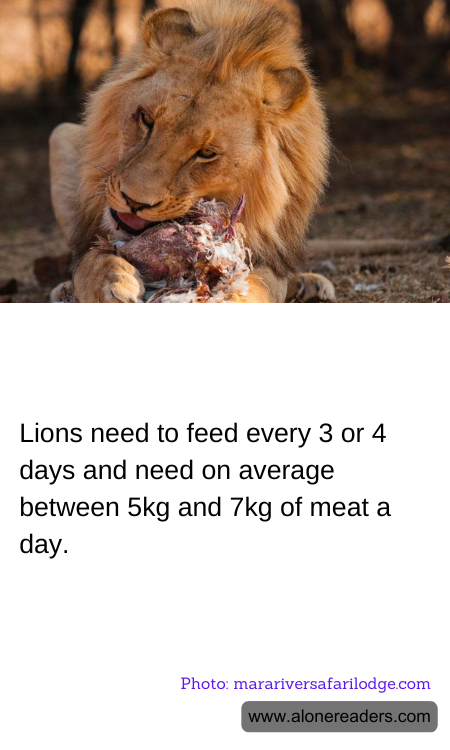
Lions are carnivorous animals, relying primarily on meat to meet their nutritional needs. On average, an adult lion requires between 5kg and 7kg of meat per day to maintain its health and energy levels. This dietary requirement is essential for sustaining their muscular build and supporting their active lifestyle, which includes hunting, patrolling their territory, and social interactions within the pride. However, unlike some other predators that might eat daily, lions typically feed every three to four days. This feeding pattern is largely influenced by the availability of prey and the success of their hunts.
The hunting process for lions is a complex and cooperative effort, often involving several members of the pride. Female lions, or lionesses, are primarily responsible for hunting, using their agility and teamwork to bring down prey. They often target large herbivores such as zebras, wildebeests, and buffaloes, which provide ample meat to sustain the pride for several days. Once a successful hunt is completed, the lions gorge on the kill, consuming as much as they can in one sitting. This feast-and-famine cycle is a natural adaptation to the unpredictable availability of food in the wild.
After a substantial meal, lions can go without eating for a few days, relying on the energy reserves stored in their bodies. This ability to endure periods without food is crucial, especially during times when prey is scarce or when hunting attempts are unsuccessful. During these fasting periods, lions conserve energy by resting and minimizing unnecessary movement, which is why they are often seen lounging in the shade during the heat of the day.
The feeding habits of lions also play a significant role in the ecosystem. As apex predators, they help regulate the populations of herbivores, maintaining a balance that supports the health of their environment. By controlling the numbers of prey species, lions indirectly influence the vegetation and the overall biodiversity of their habitat.
In conclusion, the feeding habits of lions are a testament to their adaptability and resilience in the wild. Their ability to consume large quantities of meat in one sitting and endure periods without food highlights the intricate balance of nature and the challenges faced by these magnificent creatures. Understanding these dynamics not only enriches our appreciation for lions but also underscores the importance of conserving their habitats to ensure their survival for generations to come.
