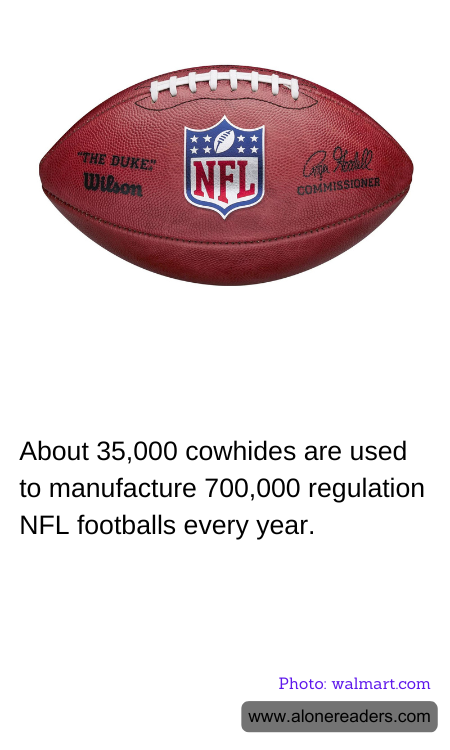
Every year, the National Football League (NFL) produces approximately 700,000 regulation footballs, a staggering number that underscores the immense popularity and demand for the sport. What might surprise many fans, however, is the amount of raw material required to manufacture these iconic pigskins. Approximately 35,000 cowhides are used annually to meet the NFL's football production needs, highlighting the intricate relationship between agriculture and sports.
The process of transforming cowhides into footballs is a fascinating blend of tradition and precision. Each football is crafted to meet strict specifications set by the NFL, ensuring consistency in size, weight, and performance. The journey begins with the selection of high-quality cowhides, primarily sourced from the United States. These hides are then subjected to a meticulous tanning process, which not only preserves the leather but also enhances its durability and texture, making it suitable for the rigors of professional play.
Once tanned, the leather is cut into panels, stitched together, and inflated to create the final product. This craftsmanship is often carried out by skilled workers who have honed their expertise over many years. The result is a football that not only meets the NFL's rigorous standards but also embodies the spirit of the game, from the Friday night lights of high school fields to the grand stages of Super Bowl Sundays.
The use of cowhides in football production also raises important discussions about sustainability and ethical sourcing. As consumers become more conscious of the environmental and ethical implications of their purchases, the NFL and its suppliers are increasingly focused on ensuring that the leather used in footballs is sourced responsibly. This includes adhering to practices that promote animal welfare and minimize environmental impact, ensuring that the tradition of football can continue in a way that respects both the game and the planet.
For fans of the sport, understanding the origins of the football adds a layer of appreciation to the game. Each pass, catch, and touchdown is not just a testament to athletic prowess but also a nod to the craftsmanship and resources that make the sport possible. As the NFL continues to grow in popularity, the demand for footballs will likely increase, prompting ongoing innovation in materials and manufacturing processes.
In conclusion, the production of NFL footballs is a remarkable example of how agriculture, craftsmanship, and sports intersect. The use of 35,000 cowhides annually is a testament to the scale and significance of the sport, as well as a reminder of the importance of sustainable practices in preserving the traditions we hold dear. Whether you're a die-hard fan or a casual observer, the next time you watch a game, take a moment to appreciate the journey of the football itself—a journey that begins long before it ever reaches the field.
