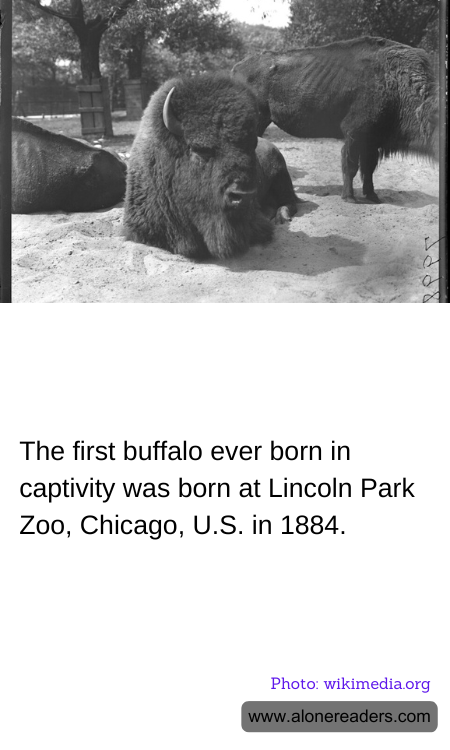
In the annals of zoological history, the year 1884 stands out as a landmark moment for wildlife conservation and zoology. It was during this year that the first buffalo ever born in captivity came into the world at the Lincoln Park Zoo in Chicago, U.S. This event marked a significant milestone in the efforts to preserve and understand the majestic American bison, an animal that holds a special place in the natural heritage of North America.
The birth of this buffalo calf was not just a triumph for the Lincoln Park Zoo but also a beacon of hope for the conservation of a species that was facing the brink of extinction. During the late 19th century, the American bison population had dwindled alarmingly due to overhunting and habitat loss. Once numbering in the millions, these iconic creatures of the Great Plains were reduced to a few hundred individuals. The successful birth of a buffalo in captivity was a testament to the potential of zoos to play a crucial role in the conservation and recovery of endangered species.
Lincoln Park Zoo, established in 1868, was one of the first zoos in the United States and quickly became a pioneer in wildlife conservation. The birth of the buffalo calf was a result of the zoo's dedication to creating a nurturing environment for its animals, allowing them to thrive and reproduce. This achievement underscored the importance of zoos as centers for education, research, and conservation, providing a controlled environment where species could be studied and protected from the threats they faced in the wild.
The successful breeding of buffalo in captivity also sparked a broader interest in the conservation of the species. It highlighted the need for coordinated efforts to protect the remaining wild populations and restore their natural habitats. This event helped to galvanize public and governmental support for conservation initiatives, leading to the establishment of protected areas and reserves where bison could roam freely and safely.
Today, the legacy of that first buffalo born in captivity continues to inspire conservationists and animal lovers alike. The American bison has made a remarkable recovery, with populations now thriving in national parks and reserves across the United States and Canada. The story of the Lincoln Park Zoo's pioneering achievement serves as a reminder of the impact that dedicated conservation efforts can have on preserving our planet's biodiversity.
In conclusion, the birth of the first buffalo in captivity at Lincoln Park Zoo in 1884 was a pivotal moment in the history of wildlife conservation. It demonstrated the potential of zoos to contribute to the survival of endangered species and laid the groundwork for future conservation successes. As we continue to face environmental challenges, this historic event remains a source of inspiration and a testament to the power of human ingenuity and compassion in the quest to protect our natural world.
