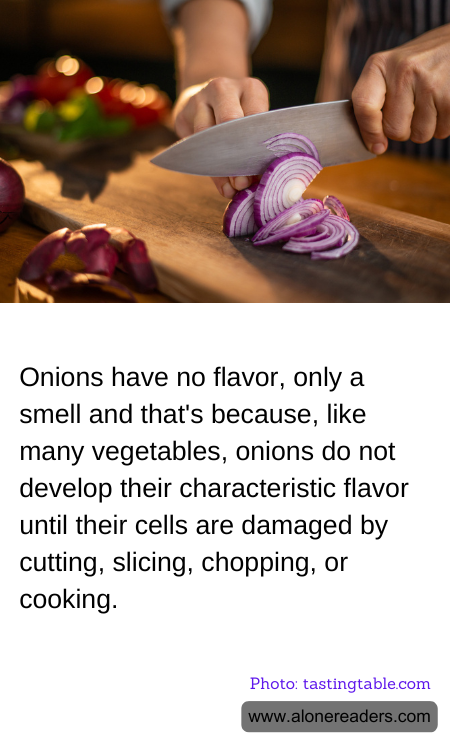
Onions are a staple in kitchens around the world, known for their pungent aroma and the tears they often bring to our eyes. However, a common misconception is that onions have a distinct flavor even before they are cut. In reality, onions do not develop their characteristic flavor until their cells are damaged through cutting, slicing, chopping, or cooking. This transformation is a fascinating interplay of chemistry and biology that turns a seemingly bland vegetable into a culinary powerhouse.
When an onion is whole, its cells are intact, and the compounds responsible for its flavor are kept separate. The magic begins when these cells are disrupted. Inside an onion, there are sulfur-containing compounds and an enzyme called alliinase. When you cut into an onion, the enzyme comes into contact with the sulfur compounds, initiating a chemical reaction that produces a variety of volatile compounds. These compounds are responsible for the onion's distinctive aroma and flavor, which can range from sweet and mild to sharp and pungent, depending on the type of onion and how it is prepared.
The most well-known compound produced during this reaction is syn-propanethial-S-oxide, which is responsible for the tears we shed while chopping onions. This compound is volatile, meaning it easily becomes airborne, reaching our eyes and causing irritation. While this might be an inconvenience for cooks, it is a small price to pay for the depth of flavor onions can bring to a dish.
Cooking onions further enhances their flavor profile. Heat breaks down the sulfur compounds and transforms them into sweeter, less pungent flavors. This is why caramelized onions, which are cooked slowly over low heat, develop a rich, sweet taste that is worlds apart from their raw state. The Maillard reaction, a chemical reaction between amino acids and reducing sugars, also plays a role in this transformation, contributing to the complex flavors and appealing golden-brown color of cooked onions.
Onions are not alone in this transformation; many vegetables undergo similar changes when their cells are damaged. Garlic, for example, also relies on the interaction between enzymes and sulfur compounds to develop its characteristic flavor. This process highlights the intricate chemistry that underlies the foods we eat and the importance of preparation methods in unlocking the full potential of ingredients.
Understanding the science behind onions can enhance our appreciation for this humble vegetable and its role in cooking. Whether used as a base for soups and stews, a topping for burgers, or a key ingredient in a stir-fry, onions add depth and complexity to countless dishes. The next time you find yourself chopping an onion, remember that you are not just preparing a vegetable; you are engaging in a chemical transformation that has been perfected over centuries of culinary tradition.
