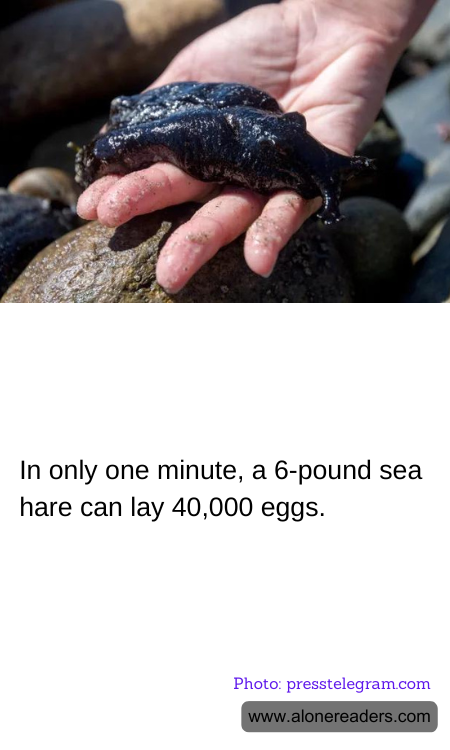
In the vast and mysterious world of marine life, few creatures capture the imagination quite like the sea hare. These fascinating mollusks, known for their unique appearance and intriguing behaviors, are a testament to the wonders of the ocean. One of the most remarkable aspects of the sea hare is its reproductive prowess. In just one minute, a 6-pound sea hare can lay an astonishing 40,000 eggs, a feat that underscores the incredible adaptability and survival strategies of marine organisms.
Sea hares belong to the family Aplysiidae and are a type of large sea slug. They are named for their rabbit-like appearance, with two long, ear-like appendages called rhinophores. These creatures are found in oceans worldwide, often inhabiting shallow waters where they feed on algae. Despite their somewhat unassuming appearance, sea hares play a crucial role in the marine ecosystem, contributing to the balance of algae populations and serving as a food source for various predators.
The reproductive process of the sea hare is a marvel of nature. During the breeding season, these creatures engage in a unique mating ritual that often involves multiple partners. Sea hares are hermaphrodites, meaning each individual possesses both male and female reproductive organs. This allows them to mate with any other sea hare they encounter, increasing their chances of successful reproduction. Once fertilization occurs, the sea hare begins the rapid process of laying eggs.
The sheer number of eggs laid by a sea hare in such a short time is a testament to the species' evolutionary success. By producing tens of thousands of eggs, sea hares ensure that at least some of their offspring will survive the many challenges of ocean life, from predation to environmental changes. The eggs are typically laid in long, gelatinous strings that are anchored to the substrate, providing some protection until they hatch.
The life cycle of a sea hare is relatively short, with most species living for only a year. This brief lifespan necessitates a high reproductive rate to maintain population levels. The rapid egg-laying ability of sea hares is a crucial adaptation that allows them to thrive in their natural habitats. As the eggs hatch, the tiny larvae drift in the ocean currents, eventually settling on the seafloor to begin their own journey as sea hares.
The story of the sea hare and its remarkable reproductive capabilities is a reminder of the incredible diversity and complexity of life in our oceans. These creatures, though small and often overlooked, play a vital role in maintaining the health of marine ecosystems. By understanding and appreciating the unique characteristics of sea hares, we gain a deeper insight into the intricate web of life that exists beneath the waves. As we continue to explore and learn about the ocean's inhabitants, the sea hare stands out as a symbol of nature's ingenuity and resilience.
