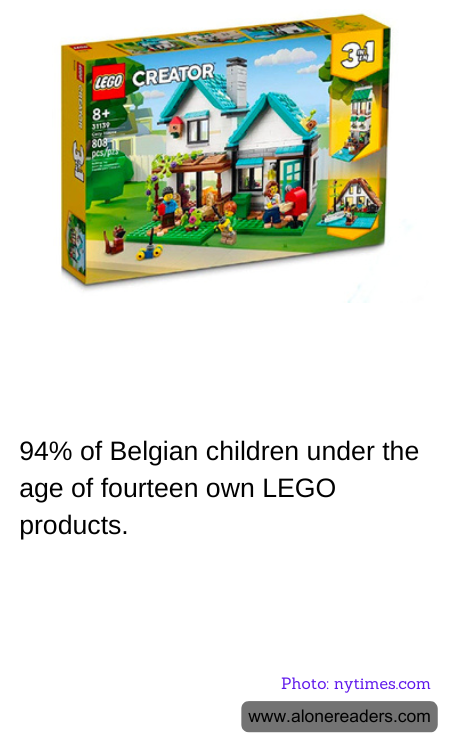
In a world where digital entertainment often takes center stage, the enduring appeal of LEGO bricks remains remarkably strong, especially among the youth of Belgium. A recent study has revealed that a staggering 94% of Belgian children under the age of fourteen own LEGO products. This statistic not only highlights the popularity of these colorful building blocks but also underscores their significance in the developmental journey of young minds.
LEGO, a Danish invention that has captured the hearts of children and adults alike since its inception in 1932, continues to be a staple in toy collections across the globe. In Belgium, the affinity for LEGO is particularly pronounced, with almost every child engaging with these versatile bricks. The reasons for this widespread popularity are manifold. At its core, LEGO offers a unique blend of creativity, education, and entertainment. Children are naturally drawn to the endless possibilities that LEGO sets provide, allowing them to construct anything from simple structures to complex, imaginative worlds.
The educational benefits of LEGO are well-documented. As children manipulate the bricks, they develop fine motor skills and spatial awareness. The process of building encourages problem-solving and critical thinking, as young builders must plan and execute their designs. Furthermore, LEGO sets often come with themes that spark interest in various subjects, from architecture and engineering to history and fantasy. This makes LEGO not just a toy, but a tool for learning that aligns with the educational goals of many parents and educators.
In Belgium, the cultural embrace of LEGO is also supported by a strong community of enthusiasts and events. LEGO exhibitions and conventions are popular, providing platforms for children to showcase their creations and draw inspiration from others. These gatherings foster a sense of community and collaboration, encouraging children to share ideas and work together on projects. Such interactions are invaluable in teaching social skills and teamwork, further enhancing the developmental benefits of LEGO play.
Moreover, the appeal of LEGO transcends age, making it a perfect medium for family bonding. Parents who grew up with LEGO often find joy in sharing the experience with their children, creating a shared activity that bridges generations. This familial connection is particularly evident in Belgium, where LEGO sets are often passed down, becoming cherished heirlooms that carry memories and stories.
In conclusion, the fact that 94% of Belgian children under fourteen own LEGO products is a testament to the toy's universal appeal and educational value. In an age where digital distractions are ubiquitous, LEGO stands out as a timeless tool that nurtures creativity, learning, and family connections. As Belgian children continue to build, imagine, and explore with LEGO, they are not just playing—they are laying the foundation for a lifetime of curiosity and innovation.
