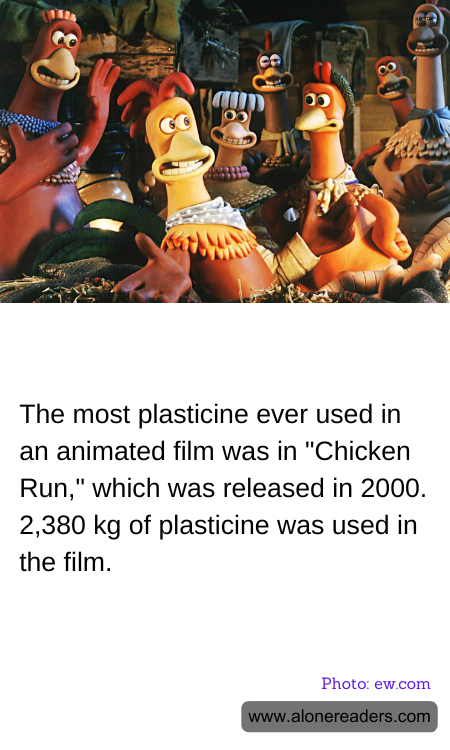
In the world of animation, where digital technology often takes center stage, the 2000 film "Chicken Run" stands out as a testament to the enduring charm and craftsmanship of stop-motion animation. This beloved film, produced by Aardman Animations and DreamWorks Animation, not only captivated audiences with its engaging storyline and quirky characters but also set a remarkable record in the realm of animated filmmaking. "Chicken Run" holds the distinction of using the most plasticine ever in an animated film, with a staggering 2,380 kilograms of the material employed to bring its characters and scenes to life.
Plasticine, a malleable modeling clay, has been a staple in stop-motion animation for decades. Its versatility allows animators to create detailed and expressive characters, which can be manipulated frame by frame to produce fluid motion. In "Chicken Run," this technique was pushed to its limits, resulting in a film that is both visually stunning and rich in detail. The sheer volume of plasticine used in the production is a testament to the dedication and artistry of the animators, who painstakingly crafted each character and scene by hand.
The film's plot, which follows a group of chickens attempting to escape from a farm before they are turned into pies, is brought to life through the meticulous work of the animators. Each character, from the determined Ginger to the bumbling Rocky, was sculpted with precision, allowing for a range of expressions and movements that convey the film's humor and heart. The use of plasticine also enabled the creation of intricate sets and props, adding depth and texture to the film's world.
"Chicken Run" was not only a technical achievement but also a commercial success, becoming the highest-grossing stop-motion animated film at the time of its release. Its appeal lies in its ability to blend traditional animation techniques with a compelling narrative, creating a timeless story that resonates with audiences of all ages. The film's success paved the way for future stop-motion projects, proving that there is still a place for handcrafted animation in an increasingly digital world.
The legacy of "Chicken Run" extends beyond its box office success and record-setting use of plasticine. It serves as an inspiration for aspiring animators and a reminder of the power of creativity and craftsmanship. In an era where computer-generated imagery often dominates the animation landscape, "Chicken Run" stands as a celebration of the artistry and dedication required to bring a story to life through stop-motion animation. Its enduring popularity is a testament to the magic that can be created when traditional techniques are combined with a passion for storytelling.
