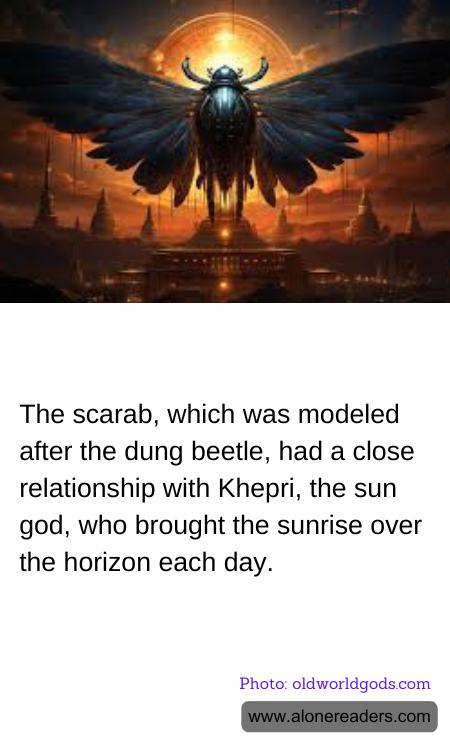
In the rich tapestry of ancient Egyptian mythology, few symbols are as intriguing and enduring as the scarab beetle. This small creature, modeled after the dung beetle, held profound significance in the spiritual and daily lives of the Egyptians. Its connection to Khepri, the sun god, highlights the beetle's esteemed place in their cosmology and its symbolic representation of life, renewal, and the eternal cycle of the sun.
The scarab beetle, known scientifically as Scarabaeus sacer, was observed by the Egyptians as it rolled balls of dung across the ground. This seemingly mundane activity was imbued with deep symbolic meaning. The Egyptians saw a parallel between the beetle's labor and the journey of the sun across the sky. Just as the beetle rolled its ball, Khepri, the god of the rising sun, was believed to roll the sun across the horizon each day, bringing light and life to the world. This daily renewal of the sun was a powerful metaphor for rebirth and regeneration, central themes in Egyptian belief systems.
Khepri, whose name means "to become" or "to come into being," was often depicted as a man with the head of a scarab beetle. This imagery reinforced the connection between the god and the beetle, emphasizing the transformative power of the sun. Khepri was not only associated with the sunrise but also with the concept of creation and the eternal cycle of life and death. The scarab, therefore, became a potent symbol of immortality and protection, often used in amulets and jewelry to safeguard the wearer in both life and the afterlife.
The scarab's role extended beyond mythology into the practical and spiritual realms of Egyptian society. Scarab amulets were commonly placed in tombs to ensure safe passage to the afterlife, symbolizing the deceased's rebirth and eternal life. These amulets were inscribed with prayers or spells, invoking the protection and favor of the gods. The widespread use of scarab imagery in art and artifacts underscores its importance as a cultural and religious icon.
In modern times, the scarab continues to capture the imagination, serving as a reminder of the ancient Egyptians' profound connection to nature and their understanding of the cycles that govern life. The scarab's association with Khepri and the sun god's daily journey across the sky remains a powerful symbol of hope, renewal, and the enduring mystery of existence. As we reflect on this ancient symbol, we are reminded of the timeless human quest to understand our place in the universe and the natural forces that shape our world.
