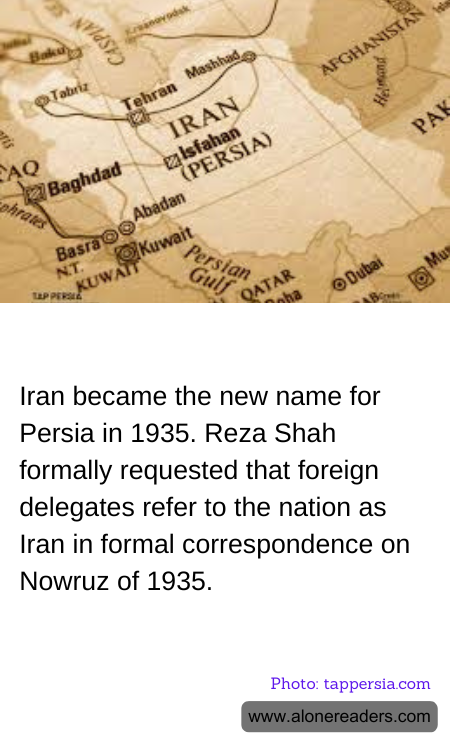
In 1935, a significant change in nomenclature took place that would reshape the identity of a nation with a rich and ancient history. Persia, a name that had been synonymous with a vast empire and a cradle of civilization, officially became known as Iran. This change was initiated by Reza Shah Pahlavi, the then ruler of the country, who sought to modernize and unify the nation under a new identity that resonated with its historical roots.
The decision to rename Persia to Iran was not made lightly. Reza Shah, who had embarked on a series of reforms to modernize the country, believed that the name Iran, which means "Land of the Aryans," was more reflective of the nation's heritage and its people. The term "Iran" had been used by its inhabitants for centuries, but it was largely unfamiliar to the Western world, which had long referred to the country as Persia. By adopting the name Iran, Reza Shah aimed to foster a sense of national pride and unity, while also aligning the country more closely with its pre-Islamic past.
The formal request to change the name was made on Nowruz, the Persian New Year, in 1935. This timing was symbolic, as Nowruz is a celebration of renewal and rebirth, making it an apt occasion to introduce a new national identity. Reza Shah's request was directed at foreign delegates, urging them to use the name Iran in all formal correspondence. This move was part of a broader strategy to assert the country's sovereignty and independence on the international stage, as well as to distance it from colonial influences.
The transition from Persia to Iran was met with mixed reactions. While many Iranians embraced the change as a reflection of their national identity, others were concerned about the potential loss of the cultural and historical associations tied to the name Persia. The name Persia evoked images of a grand empire, renowned for its contributions to art, science, and philosophy. However, Reza Shah's vision of a modern, unified Iran ultimately prevailed, and the name change was gradually accepted both domestically and internationally.
Today, the name Iran is recognized worldwide, yet the legacy of Persia continues to be celebrated. The country's rich history, from the ancient Persian Empire to the modern Islamic Republic, is a testament to its enduring cultural and historical significance. The decision to rename Persia as Iran was a pivotal moment in the nation's history, marking a new chapter in its ongoing journey of self-definition and modernization. As Iran continues to navigate its place in the world, the echoes of its past remain an integral part of its identity, reminding us of the complex tapestry of history that shapes nations and their people.
