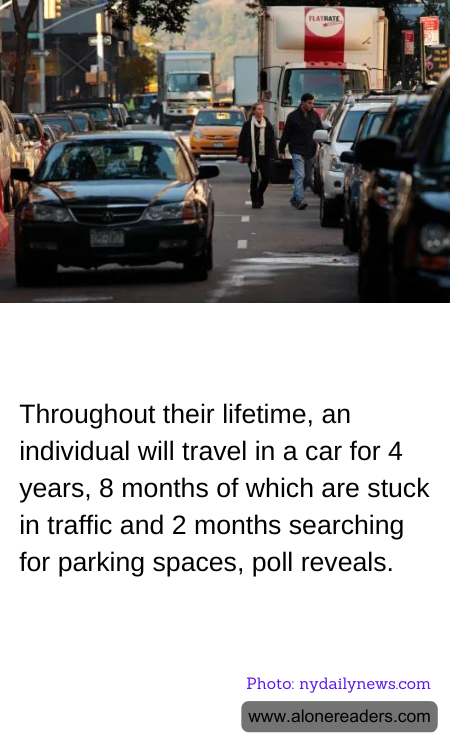
In the hustle and bustle of modern life, cars have become an indispensable part of our daily routines. A recent poll has revealed a startling statistic: over the course of a lifetime, an individual will spend approximately four years traveling in a car. This revelation underscores the significant role that automobiles play in our lives, but it also highlights some of the less glamorous aspects of car travel.
Of the four years spent in a car, a staggering eight months are consumed by the monotony of being stuck in traffic. This figure is a stark reminder of the congestion that plagues urban areas worldwide. Traffic jams not only test our patience but also have broader implications for our health and the environment. The stress of sitting in traffic can contribute to increased anxiety and frustration, while the idling engines contribute to air pollution, exacerbating climate change and affecting air quality.
Adding to the time spent in traffic, the poll also reveals that individuals spend an additional two months of their lives searching for parking spaces. This often-overlooked aspect of car travel can be a source of daily frustration, particularly in densely populated cities where parking is scarce. The quest for a parking spot can lead to increased fuel consumption and emissions, further compounding the environmental impact of our reliance on cars.
These findings prompt a reflection on our transportation habits and the infrastructure that supports them. As urban populations continue to grow, the demand for efficient and sustainable transportation solutions becomes more pressing. Cities around the world are exploring innovative approaches to alleviate traffic congestion and improve parking availability. From the implementation of smart traffic management systems to the promotion of public transportation and cycling, there are numerous strategies being employed to address these challenges.
For individuals, these statistics may serve as a catalyst for reconsidering personal transportation choices. Carpooling, using public transportation, or even opting for alternative modes of travel like cycling or walking can significantly reduce the time spent in traffic and searching for parking. Additionally, the rise of electric vehicles and car-sharing services presents opportunities to lessen the environmental impact of car travel.
Ultimately, while cars offer unparalleled convenience and freedom, the time spent in traffic and searching for parking highlights the need for a more balanced approach to transportation. By embracing a combination of personal and public transportation options, individuals can not only reclaim some of the time lost to traffic but also contribute to a more sustainable future. As we navigate the roads of life, these insights remind us of the importance of thoughtful travel choices and the potential for positive change in our daily commutes.
