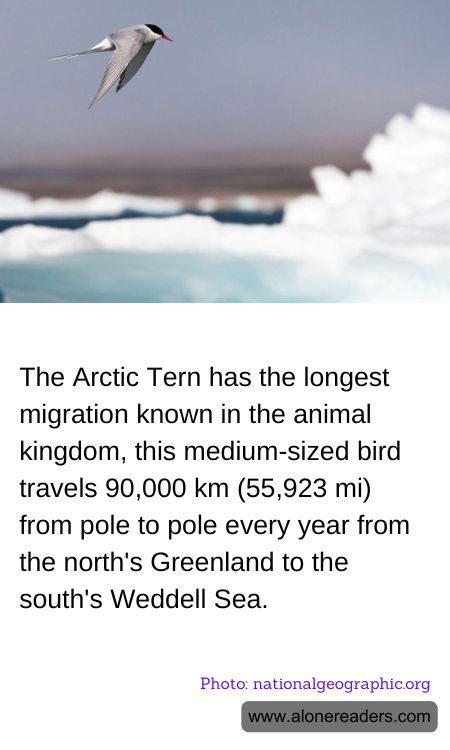
The Arctic Tern, a remarkable medium-sized bird, holds the record for the longest migration in the animal kingdom. This incredible avian traveler embarks on an awe-inspiring journey each year, covering approximately 90,000 kilometers (55,923 miles) from the northern reaches of Greenland to the southern expanse of the Weddell Sea in Antarctica. This epic voyage is not only a testament to the bird's endurance and navigational prowess but also a fascinating natural phenomenon that captivates scientists and bird enthusiasts alike.
The Arctic Tern's migration is a round-trip journey that spans from pole to pole, allowing it to experience two summers each year. This perpetual summer lifestyle is a unique adaptation that maximizes the bird's exposure to sunlight, which is crucial for feeding and breeding. As the Arctic Tern travels from the Arctic to the Antarctic, it follows a zigzagging path that takes advantage of prevailing wind patterns, helping to conserve energy over the vast distances it covers. This strategic route is a marvel of natural engineering, showcasing the bird's ability to navigate across open oceans with precision.
The journey begins in the breeding grounds of the Arctic, where the terns nest and raise their young during the brief summer months. As the Arctic summer wanes, the terns take to the skies, embarking on their southward migration. Along the way, they encounter a variety of ecosystems and climates, from the icy waters of the North Atlantic to the temperate zones of the equator. This diverse range of habitats provides the terns with ample feeding opportunities, allowing them to refuel and continue their journey.
Upon reaching the Antarctic, the Arctic Terns spend the southern summer in the nutrient-rich waters of the Weddell Sea. Here, they feast on a diet of fish and small marine invertebrates, building up their energy reserves for the return trip north. This cyclical migration not only ensures the survival of the species but also plays a vital role in the ecosystems they traverse, as the terns contribute to nutrient cycling and serve as prey for larger predators.
The Arctic Tern's extraordinary migration is a testament to the resilience and adaptability of nature. It serves as a reminder of the interconnectedness of global ecosystems and the importance of preserving these natural wonders for future generations. As climate change and human activities continue to impact the planet, understanding and protecting the migratory patterns of species like the Arctic Tern becomes increasingly crucial. By appreciating the incredible journey of the Arctic Tern, we gain a deeper insight into the delicate balance of our natural world and the remarkable creatures that inhabit it.
