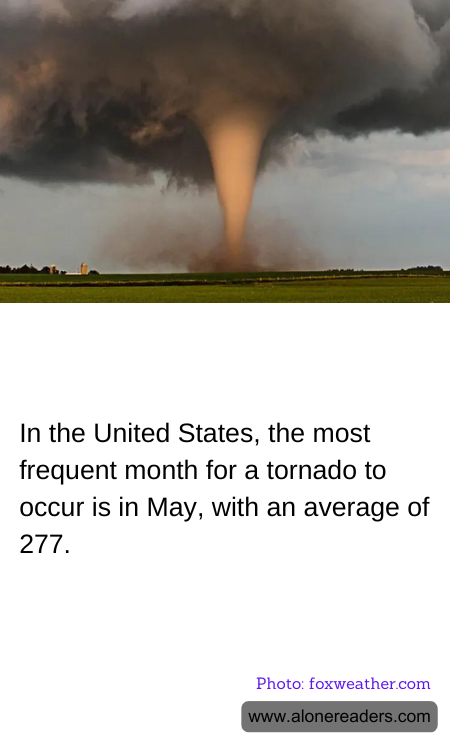
Tornadoes are among the most powerful and unpredictable natural phenomena, captivating both meteorologists and the general public with their sheer force and the dramatic impact they can have on communities. In the United States, tornadoes are a common occurrence, particularly in the central region known as "Tornado Alley," which includes parts of Texas, Oklahoma, Kansas, and Nebraska. While tornadoes can occur at any time of the year, May stands out as the most frequent month for these storms, with an average of 277 tornadoes occurring during this period.
The prevalence of tornadoes in May can be attributed to several meteorological factors. During this month, the atmospheric conditions are particularly conducive to the formation of tornadoes. As spring transitions into summer, warm, moist air from the Gulf of Mexico begins to move northward, colliding with cooler, drier air descending from the Rocky Mountains and Canada. This clash of air masses creates the perfect environment for severe thunderstorms, which can spawn tornadoes. The increased daylight hours and rising temperatures also contribute to the instability in the atmosphere, further enhancing the likelihood of tornado formation.
May's tornado activity is not only a result of favorable weather conditions but also a reflection of the geographical and topographical features of the United States. The flat plains of the central U.S. provide little resistance to the movement of air masses, allowing for the rapid development of severe weather systems. This region's unique landscape, combined with the seasonal weather patterns, makes it particularly susceptible to tornadoes during this time of year.
The impact of tornadoes in May can be significant, affecting both rural and urban areas. These storms can cause widespread destruction, damaging homes, infrastructure, and agriculture. The human toll can also be severe, with injuries and fatalities occurring when people are caught in the path of a tornado. As a result, communities in tornado-prone areas have developed robust warning systems and emergency preparedness plans to mitigate the risks associated with these storms. Advances in meteorological technology have improved the ability to predict and track tornadoes, providing valuable lead time for those in their path to seek shelter.
Despite the dangers posed by tornadoes, they also serve as a reminder of the power and complexity of nature. For scientists and researchers, studying tornadoes offers insights into atmospheric dynamics and helps improve forecasting models. For the public, understanding the conditions that lead to tornado formation can enhance awareness and preparedness, reducing the potential for harm.
In conclusion, May's distinction as the most frequent month for tornadoes in the United States underscores the intricate interplay of weather patterns and geographical features that define this period. While the threat of tornadoes is a serious concern, ongoing advancements in science and technology continue to enhance our ability to predict and respond to these formidable natural events. By fostering a culture of preparedness and resilience, communities can better withstand the challenges posed by tornadoes, ensuring safety and security for all.
