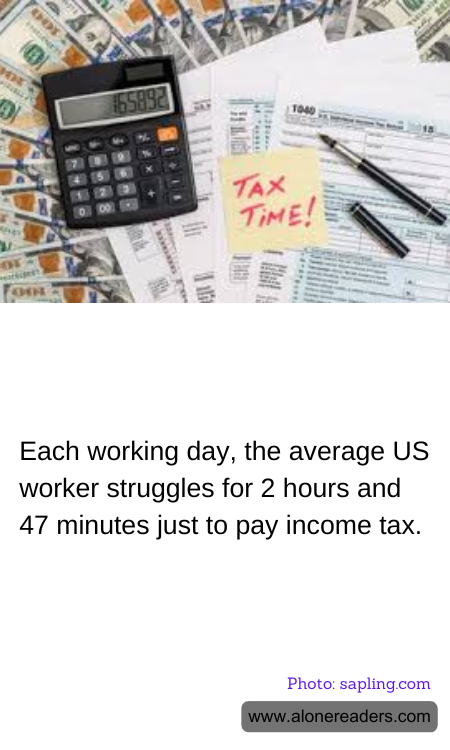
In the United States, the concept of taxation is as old as the nation itself, yet it remains a topic of perennial debate and concern. For the average American worker, the burden of income tax is not just a line on a paycheck; it represents a significant portion of their daily labor. Recent analyses suggest that each working day, the average U.S. worker spends approximately 2 hours and 47 minutes working solely to pay their income tax. This statistic sheds light on the substantial impact taxes have on the daily lives of millions of Americans.
The calculation of how much time is spent working to pay taxes is based on the average income and the corresponding tax rates. For many, this time represents a significant portion of their workday, often overshadowing the time spent on other essential expenses like housing, food, and healthcare. This reality prompts a broader discussion about the balance between taxation and the services it funds, as well as the efficiency and fairness of the current tax system.
Income tax is a crucial source of revenue for the government, funding essential services such as education, infrastructure, defense, and social programs. However, the perception of its fairness and efficiency varies widely among taxpayers. For some, the time spent working to pay taxes is seen as a necessary contribution to the common good, ensuring that society functions smoothly and that public services are available to all. For others, it can feel like an undue burden, particularly when the benefits of these taxes are not immediately visible or when government spending appears inefficient or mismanaged.
The time spent working to pay taxes also highlights the broader economic pressures faced by many workers. With rising costs of living and stagnant wages, the financial strain of taxes can be particularly acute. This has led to calls for tax reform aimed at simplifying the tax code, reducing rates, and closing loopholes that disproportionately benefit the wealthy. Such reforms could potentially reduce the time workers spend laboring for taxes, allowing them to allocate more of their earnings toward personal and family needs.
Ultimately, the 2 hours and 47 minutes spent each day working to pay income tax is more than just a statistic; it is a reflection of the complex relationship between citizens and their government. It underscores the need for ongoing dialogue about how taxes are levied and spent, ensuring that the system is equitable and that the benefits of taxation are felt by all. As the nation continues to evolve, so too must its approach to taxation, striving for a balance that respects the contributions of its workers while providing for the common good.
